Dowling One Name Study
Person Page 2
Ogaman1
M, #26, d. DECEASED
| References | Kings My Ancestors The Bible - from Adam to Heber Glunfionn (#1) The Bible - from Adam to Heber Glunfionn (#2) |
Parents
| Father* | Beouman (d. DECEASED) |
| Pedigree Link |
Family
Family:
| Son* | Tait+ (d. DECEASED) |
Biography
Ogaman died DECEASED in Georgia Scythia (Central Europe.)
Facts
Ogaman was affiliated with Pagan. He was King of Scythia in Georgia.2 He had reference number 26. King of Scythia in constant war with natives.
Citations
- [S2] John O'Hart, Irish Pedigrees or Origin and Stem of The Irish Nation, Source Medium: Book
Source Quality: Good
Much of the Biblical genealogy is a stratight lift from the Bible and while the following characters are generally known to exist there are disputes with O'Hart on order and dates. For its time this was a scholarly work but the various source historical documents do provide confusion themselves., 49 - [S3] John O'Hart, Irish Pedigrees or The Origin and Stem of The Irish Nation, Source Medium: Book
Source Quality: Good
Much of the Biblical genealogy is a stratight lift from the Bible and while the following characters are generally known to exist there are disputes with O'Hart on order and dates. For its time this was a scholarly work but the various source historical documents do provide confusion themselves., 640
Tait1
M, #27, d. DECEASED
| References | Kings My Ancestors The Bible - from Adam to Heber Glunfionn (#1) The Bible - from Adam to Heber Glunfionn (#2) |
Parents
| Father* | Ogaman (d. DECEASED) |
| Pedigree Link |
Family
Family:
| Son* | Agnon+ (d. DECEASED) |
Biography
Tait died DECEASED in Georgia Scythia (Central Europe.)
Facts
Tait was affiliated with Pagan. He was King of Scythia in Georgia.2 He had reference number 27. King of Scythia in constant war with natives.
Citations
- [S2] John O'Hart, Irish Pedigrees or Origin and Stem of The Irish Nation, Source Medium: Book
Source Quality: Good
Much of the Biblical genealogy is a stratight lift from the Bible and while the following characters are generally known to exist there are disputes with O'Hart on order and dates. For its time this was a scholarly work but the various source historical documents do provide confusion themselves., 49 - [S3] John O'Hart, Irish Pedigrees or The Origin and Stem of The Irish Nation, Source Medium: Book
Source Quality: Good
Much of the Biblical genealogy is a stratight lift from the Bible and while the following characters are generally known to exist there are disputes with O'Hart on order and dates. For its time this was a scholarly work but the various source historical documents do provide confusion themselves., 640
Agnon1
M, #28, d. DECEASED
| References | My Ancestors The Bible - from Adam to Heber Glunfionn (#1) The Bible - from Adam to Heber Glunfionn (#2) |
Parents
| Father* | Tait (d. DECEASED) |
| Pedigree Link |
Family
Family:
| Son* | Lamhfionn+ (d. DECEASED) |


ANCIENTS-Map-Caspian-Sea-Agnon-004.jpg
Biography
Agnon died DECEASED in Caspian Sea on board ship.
Facts
Agnon was affiliated with Pagan. He had reference number 28. Agnon, after the death of his father Tait, King of Scythia, with his followers took their ships and sailed the Caspian Sea for several years (some say seven) in which time he died.
(Caspian Sea
Located in southwestern Asia, the Caspian Sea ranks as the largest inland body of water in the world. Several rivers empty into the Caspian Sea, although their flow has diminished due to dams and lakes. The sea has no outlet, and water level is maintained by evaporation, especially in the Kara-Bogaz-Gol, one of the many large gulfs on the eastern portion of the coastline.
"Caspian Sea," Microsoft(R) Encarta(R) 98 Encyclopedia. (c) 1993-1997 Microsoft Corporation. All rights reserved.)
(Caspian Sea
Located in southwestern Asia, the Caspian Sea ranks as the largest inland body of water in the world. Several rivers empty into the Caspian Sea, although their flow has diminished due to dams and lakes. The sea has no outlet, and water level is maintained by evaporation, especially in the Kara-Bogaz-Gol, one of the many large gulfs on the eastern portion of the coastline.
"Caspian Sea," Microsoft(R) Encarta(R) 98 Encyclopedia. (c) 1993-1997 Microsoft Corporation. All rights reserved.)
Citations
- [S2] John O'Hart, Irish Pedigrees or Origin and Stem of The Irish Nation, Source Medium: Book
Source Quality: Good
Much of the Biblical genealogy is a stratight lift from the Bible and while the following characters are generally known to exist there are disputes with O'Hart on order and dates. For its time this was a scholarly work but the various source historical documents do provide confusion themselves., 49
Cessair Chrothach
F, #29, d. DECEASED
| References | My Ancestors |
| Pedigree Link |
Family
Family: Ugaine Mor Heremon (d. 593 BCE)
| Son* | Laeghaire Lorc O'Connor-Faley-No.8+ (d. 591 BCE) |
| Son* | Cobthach Caolbhreagh Heremon (d. 541 BCE) |
Biography
Cessair Chrothach was born in France. She died DECEASED in Ireland.
Facts
Cessair Chrothach was also known as Kesair. She was affiliated with Pagan. She had reference number 29. Daughter of the King of France.
Heber Glunfionn1
M, #30, d. DECEASED
| References | Heremon Line 1 - Heber Glunfionn to Oilioll Aolcheoin My Ancestors The Bible - from Adam to Heber Glunfionn (#1) The Bible - from Adam to Heber Glunfionn (#2) |
Parents
| Father* | Lamhfionn (d. DECEASED) |
| Pedigree Link |
Family
Family:
| Son* | Agnan Fionn+ (d. DECEASED) |
Biography
Heber Glunfionn was born in Libya Gothia or Getulia. He died DECEASED in Libya Gothia or Getulia.
Facts
Heber Glunfionn was affiliated with Pagan. He had reference number 30. Heber Glunfionn was born in Getulia (more recently called Libya) where he died. His posterity continued to live there to the eighth generation; and were kings or chief rulers there for one hundred and fifty years -- some say three hundred years.
Citations
- [S2] John O'Hart, Irish Pedigrees or Origin and Stem of The Irish Nation, Source Medium: Book
Source Quality: Good
Much of the Biblical genealogy is a stratight lift from the Bible and while the following characters are generally known to exist there are disputes with O'Hart on order and dates. For its time this was a scholarly work but the various source historical documents do provide confusion themselves., 50
Agnan Fionn1
M, #31, d. DECEASED
| References | Heremon Line 1 - Heber Glunfionn to Oilioll Aolcheoin Kings My Ancestors |
Parents
| Father* | Heber Glunfionn (d. DECEASED) |
| Pedigree Link |
Family
Family:
| Son* | Febric Glas+ (d. DECEASED) |
Biography
Agnan Fionn was born in Libya Gothia or Getulia. He died DECEASED in Libya Gothia or Getulia.
Facts
Agnan Fionn was affiliated with Pagan. He was King of Gothia or Getulia in Libya. He had reference number 31. Lived and died a King in Gothia or Getulia (now known as Libya).
Citations
- [S2] John O'Hart, Irish Pedigrees or Origin and Stem of The Irish Nation, Source Medium: Book
Source Quality: Good
Much of the Biblical genealogy is a stratight lift from the Bible and while the following characters are generally known to exist there are disputes with O'Hart on order and dates. For its time this was a scholarly work but the various source historical documents do provide confusion themselves., 50
Febric Glas1
M, #32, d. DECEASED
| References | Heremon Line 1 - Heber Glunfionn to Oilioll Aolcheoin Kings My Ancestors |
Parents
| Father* | Agnan Fionn (d. DECEASED) |
| Pedigree Link |
Family
Family:
| Son* | Nenuall+ (d. DECEASED) |
Biography
Febric Glas was born in Gothia or Getulia (Libya.) He died DECEASED in Gothia or Getulia (Libya.)
Facts
Febric Glas was affiliated with Pagan. He was King of Gothia or Getulia in Libya.2 He had reference number 32. Lived and died a King in Gothia or Getulia (now known as Libya).
Citations
- [S2] John O'Hart, Irish Pedigrees or Origin and Stem of The Irish Nation, Source Medium: Book
Source Quality: Good
Much of the Biblical genealogy is a stratight lift from the Bible and while the following characters are generally known to exist there are disputes with O'Hart on order and dates. For its time this was a scholarly work but the various source historical documents do provide confusion themselves., 50 - [S2] John O'Hart, Irish Pedigrees or Origin and Stem of The Irish Nation, 352
Eve
F, #33, b. 4004 BCE, d. DECEASED
| References | My Ancestors |
| Pedigree Link |
Family
Family: Adam (b. 4004 BCE, d. 3074 BCE)
| Son* | Cain (d. DECEASED) |
| Son* | Abel (d. DECEASED) |
| Son* | Seth+ (b. 4134 BCE, d. 3222 BCE) |
| Daughter* | Azura+ (b. 4130 BCE, d. DECEASED) |

ANCIENTS-Portrait-Eve
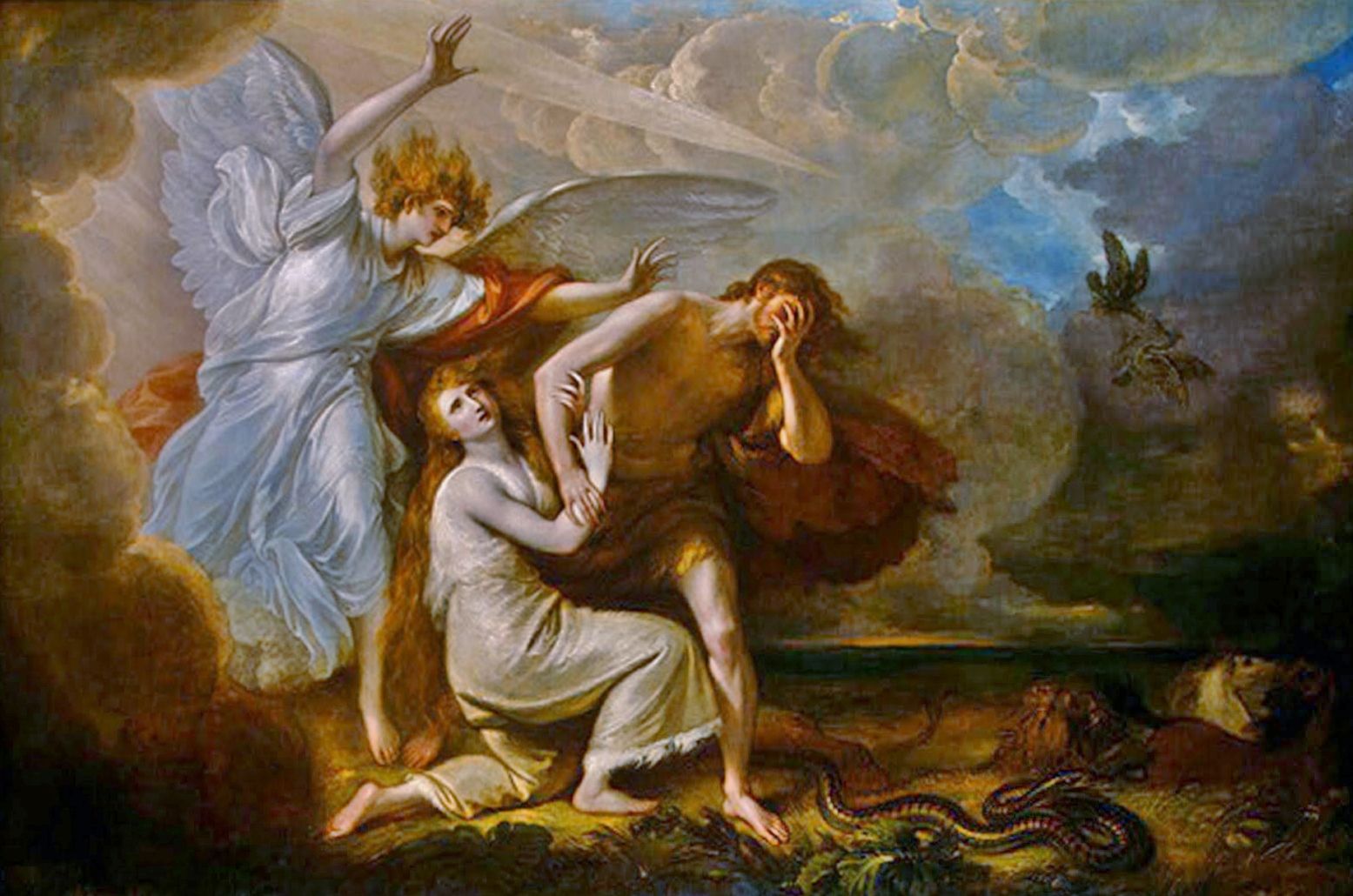

ANCIENTS-Photo-Eve-Adam-Expulsion-from-Eden.jpg
Biography
Eve was born in 4004 BCE in Ethiopia Garden of Eden; Genesis 2:22. She died DECEASED.
Facts
Eve had reference number 33.
Nenuall1
M, #34, d. DECEASED
| References | Heremon Line 1 - Heber Glunfionn to Oilioll Aolcheoin Kings My Ancestors |
Parents
| Father* | Febric Glas (d. DECEASED) |
| Pedigree Link |
Family
Family:
| Son* | Nuadhad+ (d. DECEASED) |
Biography
Nenuall was born in Libya Gothia or Getulia. He died DECEASED in Libya Gothia or Getulia.
Facts
Nenuall was affiliated with Pagan. He was King of Gothia or Getulia in Libya.2 He had reference number 34. Lived and died a King in Gothia or Getulia (now known as Libya).
Citations
- [S2] John O'Hart, Irish Pedigrees or Origin and Stem of The Irish Nation, Source Medium: Book
Source Quality: Good
Much of the Biblical genealogy is a stratight lift from the Bible and while the following characters are generally known to exist there are disputes with O'Hart on order and dates. For its time this was a scholarly work but the various source historical documents do provide confusion themselves., 50 - [S3] John O'Hart, Irish Pedigrees or The Origin and Stem of The Irish Nation, Source Medium: Book
Source Quality: Good
Much of the Biblical genealogy is a stratight lift from the Bible and while the following characters are generally known to exist there are disputes with O'Hart on order and dates. For its time this was a scholarly work but the various source historical documents do provide confusion themselves., 640
Nuadhad1
M, #35, d. DECEASED
| References | Heremon Line 1 - Heber Glunfionn to Oilioll Aolcheoin Kings My Ancestors |
Parents
| Father* | Nenuall (d. DECEASED) |
| Pedigree Link |
Family
Family:
| Son* | Alladh+ (d. DECEASED) |
Biography
Nuadhad was born in Libya Gothia or Getulia. He died DECEASED in Libya Gothia or Getulia.
Facts
Nuadhad held the title King of Gothia or Getulia. He was affiliated with Pagan. He was King of Gothia or Getulia in Libya.2 He had reference number 35. Lived and died a King in Gothia or Getulia (now known as Libya).
Citations
- [S2] John O'Hart, Irish Pedigrees or Origin and Stem of The Irish Nation, Source Medium: Book
Source Quality: Good
Much of the Biblical genealogy is a stratight lift from the Bible and while the following characters are generally known to exist there are disputes with O'Hart on order and dates. For its time this was a scholarly work but the various source historical documents do provide confusion themselves., 50 - [S3] John O'Hart, Irish Pedigrees or The Origin and Stem of The Irish Nation, Source Medium: Book
Source Quality: Good
Much of the Biblical genealogy is a stratight lift from the Bible and while the following characters are generally known to exist there are disputes with O'Hart on order and dates. For its time this was a scholarly work but the various source historical documents do provide confusion themselves., 640
Alladh1
M, #36, d. DECEASED
| References | Heremon Line 1 - Heber Glunfionn to Oilioll Aolcheoin Kings My Ancestors |
Parents
| Father* | Nuadhad (d. DECEASED) |
| Pedigree Link |
Family
Family:
| Son* | Arcadh+ (d. DECEASED) |
Biography
Alladh was born in Libya Gothia or Getulia. He died DECEASED in Libya Gothia or Getulia.
Facts
Alladh held the title King of Gothia or Getulia. He was affiliated with Pagan. He was King of Gothia or Getulia in Libya.2 He had reference number 36. Lived and died a King in Gothia or Getulia (now known as Libya).
Citations
- [S2] John O'Hart, Irish Pedigrees or Origin and Stem of The Irish Nation, Source Medium: Book
Source Quality: Good
Much of the Biblical genealogy is a stratight lift from the Bible and while the following characters are generally known to exist there are disputes with O'Hart on order and dates. For its time this was a scholarly work but the various source historical documents do provide confusion themselves., 50 - [S3] John O'Hart, Irish Pedigrees or The Origin and Stem of The Irish Nation, Source Medium: Book
Source Quality: Good
Much of the Biblical genealogy is a stratight lift from the Bible and while the following characters are generally known to exist there are disputes with O'Hart on order and dates. For its time this was a scholarly work but the various source historical documents do provide confusion themselves., 640
Arcadh1
M, #37, d. DECEASED
| References | Heremon Line 1 - Heber Glunfionn to Oilioll Aolcheoin Kings My Ancestors |
Parents
| Father* | Alladh (d. DECEASED) |
| Pedigree Link |
Family
Family:
| Son* | Deag+ (d. DECEASED) |
Biography
Arcadh was born in Libya Gothia or Getulia. He died DECEASED in Libya Gothia or Getulia.
Facts
Arcadh held the title King of Gothia or Getulia. He was affiliated with Pagan. He was King of Gothia or Getulia in Libya.2 He had reference number 37. Lived and died a King in Gothia or Getulia (now known as Libya).
Citations
- [S2] John O'Hart, Irish Pedigrees or Origin and Stem of The Irish Nation, Source Medium: Book
Source Quality: Good
Much of the Biblical genealogy is a stratight lift from the Bible and while the following characters are generally known to exist there are disputes with O'Hart on order and dates. For its time this was a scholarly work but the various source historical documents do provide confusion themselves., 50 - [S3] John O'Hart, Irish Pedigrees or The Origin and Stem of The Irish Nation, Source Medium: Book
Source Quality: Good
Much of the Biblical genealogy is a stratight lift from the Bible and while the following characters are generally known to exist there are disputes with O'Hart on order and dates. For its time this was a scholarly work but the various source historical documents do provide confusion themselves., 640
Deag1
M, #38, d. DECEASED
| References | Heremon Line 1 - Heber Glunfionn to Oilioll Aolcheoin Kings My Ancestors |
Parents
| Father* | Arcadh (d. DECEASED) |
| Pedigree Link |
Family
Family:
| Son* | Brath+ (d. DECEASED) |
Biography
Deag was born in Libya Gothia or Getulia. He died DECEASED in Libya Gothia or Getulia.
Facts
Deag held the title King of Gothia or Getulia. He was affiliated with Pagan. He was King of Gothia or Getulia in Libya.2 He had reference number 38. Lived and died a King in Gothia or Getulia (now known as Libya).
Citations
- [S2] John O'Hart, Irish Pedigrees or Origin and Stem of The Irish Nation, Source Medium: Book
Source Quality: Good
Much of the Biblical genealogy is a stratight lift from the Bible and while the following characters are generally known to exist there are disputes with O'Hart on order and dates. For its time this was a scholarly work but the various source historical documents do provide confusion themselves., 50 - [S3] John O'Hart, Irish Pedigrees or The Origin and Stem of The Irish Nation, Source Medium: Book
Source Quality: Good
Much of the Biblical genealogy is a stratight lift from the Bible and while the following characters are generally known to exist there are disputes with O'Hart on order and dates. For its time this was a scholarly work but the various source historical documents do provide confusion themselves., 640
Brath1
M, #39, d. DECEASED
| References | Heremon Line 1 - Heber Glunfionn to Oilioll Aolcheoin My Ancestors |
Parents
| Father* | Deag (d. DECEASED) |
| Pedigree Link |
Family
Family:
| Son* | Breoghan (Brigus)+ (d. DECEASED) |
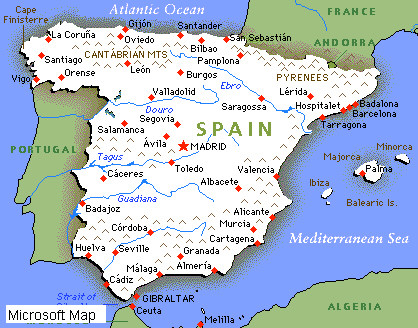

ANCIENTS-Map-Spain-01-Brath-01.jpg
Biography
Brath was born in Gothia or Getulia (Libya.) He died DECEASED in Gallicia, Spain.
Facts
Brath was affiliated with Pagan. He had reference number 39. Brath was born in Gothia (now known as Libya). Remembering the Druids prediction, given to his ancestor Lamhfionn, and his people having considerably multiplied during their abode in Getulia, he departed thence with a numerous fleet to seek out the country destined to be their final settlement, by the prophecy of Cachear, the Druid. After some time he landed on the coast of Spain, and by strong hand settled himself and his colony in Galicia, in the north of that country.
(Galicia (region, Spain) (ancient Gallaecia or Callaecia), autonomous region in north-west Spain, comprising the provinces of La Coruña, Lugo, Orense, and Pontevedra; the capital is Santiago. The region is mainly agricultural; fishing and timber are also important. Most of the people speak Galician, a language related to Portuguese. Galicia was a kingdom from 411 to 585 and again in the 11th century after the death of Ferdinand I, king of Castile and León. It came under Spanish domination late in the 15th century. In 1833, it was divided into the present provinces. Area, 29,434 sq km (9,464 sq mi); population (1991) 2,731,669.
"Galicia (region, Spain)," Microsoft(R) Encarta(R) 98 Encyclopedia. (c) 1993-1997 Microsoft Corporation. All rights reserved.)
(Galicia (region, Spain) (ancient Gallaecia or Callaecia), autonomous region in north-west Spain, comprising the provinces of La Coruña, Lugo, Orense, and Pontevedra; the capital is Santiago. The region is mainly agricultural; fishing and timber are also important. Most of the people speak Galician, a language related to Portuguese. Galicia was a kingdom from 411 to 585 and again in the 11th century after the death of Ferdinand I, king of Castile and León. It came under Spanish domination late in the 15th century. In 1833, it was divided into the present provinces. Area, 29,434 sq km (9,464 sq mi); population (1991) 2,731,669.
"Galicia (region, Spain)," Microsoft(R) Encarta(R) 98 Encyclopedia. (c) 1993-1997 Microsoft Corporation. All rights reserved.)
Citations
- [S2] John O'Hart, Irish Pedigrees or Origin and Stem of The Irish Nation, Source Medium: Book
Source Quality: Good
Much of the Biblical genealogy is a stratight lift from the Bible and while the following characters are generally known to exist there are disputes with O'Hart on order and dates. For its time this was a scholarly work but the various source historical documents do provide confusion themselves., 50
Breoghan (Brigus)1
M, #40, d. DECEASED
| References | Heremon Line 1 - Heber Glunfionn to Oilioll Aolcheoin Kings My Ancestors |
Parents
| Father* | Brath (d. DECEASED) |
| Pedigree Link |
Family
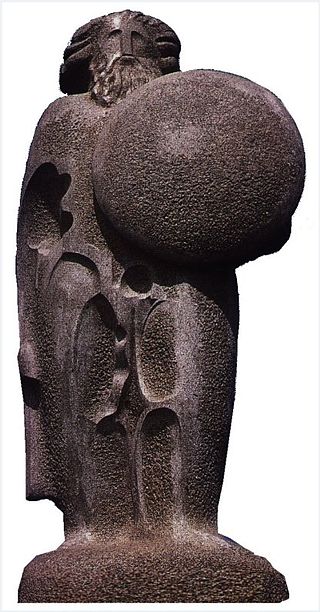

ANCIENTS-Photo-Breogan-02.jpg
ANCIENTS-Map-Spain-01-Brath-01.jpg
Biography
Facts
Breoghan (Brigus) was affiliated with Pagan. He was King of Galicia, Andalucia, Murcia, Castile & Portugal in Spain.2 He had reference number 40. Breoghan (or Brigus_ was king of Galicia, Andalusia, Murcia, Castile, and Portugal - all of which he conquered. He built Breoghan's Tower or 'Brigantia' in Galicia, and the city of Brigansa or Briganza in Portugal - called after him; and the kingdom of Castile was then also called after him Brigia. It is considered that 'Castile' itself was so called from the figure of a castle which Brigus bore for his Arms on his banner.
Brigus sent a colony into Britain, who settled in that territory now known as the counties of York, Lancaster, Durham, Westmoreland and Cumberland, and, after him were called Brigantes; whose posterity gave formidable opposition to the Romans, at the time of the Roman invasion of Britain.
-
From Wikipedia, the free encyclopedia 14Jun2016:
Breogán
-Breogán statue in A Coruña
-Breogán statue and the Tower of Hercules in A Coruña
'Breogán (also spelt Breoghan, "Bregon",' or Breachdan) is a character in the Lebor Gabála Érenn, a medieval Christian pseudo-history of Ireland and the Irish (or Gaels). He is described as a king of Galicia and an ancestor of the Gaels. The Lebor Gabála purports to be an account of how the Gaels descend from Adam through the sons of Noah and how they came to Ireland. It tells us that they spent 440 years wandering the Earth and underwent a series of trials and tribulations, which is based on the tale of the Israelites in the Old Testament. Eventually, they sail to Iberia and conquer it. There, one of their leaders, Breogán, founds a city called Brigantia and builds a great tower. From the top of the tower, his son Íth glimpses Ireland. The Gaels-including some of Breogán's sons-sail to Ireland from Brigantia and take it from the Tuatha Dé Danann, the Irish pagan gods. Brigantia likely refers to A Coruña in Galicia (which was then known as Brigantium)[1] and Breogán's tower is likely based on the Tower of Hercules (which was built at A Coruña by the Romans) or the Tower of Babel. The idea that the Irish Gaels came from Iberia may be based on the similarity of the names Iberia and Hibernia and the names Galicia and Gael.[2] Medieval pseudo-historians made similar claims about other nations based on their names.[3] A similar story about a monk who voyaged to a marvelous island he saw from the top of the tower of Brigantia was written in the first years of the eleventh century in Galicia. The story, preserved in two 14th-century manuscripts, is known as Trezenzonii de Solistitionis Insula Magna ("Trezenzonius' Great Island of the Solstice").[4] His son was Bile, who was in turn the father of Milesius (also called Míl Espáne, soldier of Hispania or Spain), said to be the ancestor of the Irish people.
The Lebor Gabála was a hugely popular and influential work. Galicia itself is sometimes described poetically as the "Home" or "Nation" of Breogán (in Galician, the fogar or nazón de Breogán). The land is so described in the anthem of Galicia, "Os Pinos". A large statue of Breogán stands near the Tower of Hercules in Corunna. In Madrid, Spain's capital, there is a park called Parque de Breogán, named after Breogán.
References
1. Encyclopaedia Britannica, "A Coruña".
2. Monaghan, Patricia. The Encyclopedia of Celtic Mythology and Folklore. Infobase Publishing, 2004. p.332
3. Carey, John. The Irish National Origin-Legend: Synthetic Pseudohistory. University of Cambridge, 1994. p.13
4. Bloom, James J. (2013). The imaginary sea voyage : sailing away in literature, legend and lore. p. 69. ISBN 9780786465255.
Brigus sent a colony into Britain, who settled in that territory now known as the counties of York, Lancaster, Durham, Westmoreland and Cumberland, and, after him were called Brigantes; whose posterity gave formidable opposition to the Romans, at the time of the Roman invasion of Britain.
-
From Wikipedia, the free encyclopedia 14Jun2016:
Breogán
-Breogán statue in A Coruña
-Breogán statue and the Tower of Hercules in A Coruña
'Breogán (also spelt Breoghan, "Bregon",' or Breachdan) is a character in the Lebor Gabála Érenn, a medieval Christian pseudo-history of Ireland and the Irish (or Gaels). He is described as a king of Galicia and an ancestor of the Gaels. The Lebor Gabála purports to be an account of how the Gaels descend from Adam through the sons of Noah and how they came to Ireland. It tells us that they spent 440 years wandering the Earth and underwent a series of trials and tribulations, which is based on the tale of the Israelites in the Old Testament. Eventually, they sail to Iberia and conquer it. There, one of their leaders, Breogán, founds a city called Brigantia and builds a great tower. From the top of the tower, his son Íth glimpses Ireland. The Gaels-including some of Breogán's sons-sail to Ireland from Brigantia and take it from the Tuatha Dé Danann, the Irish pagan gods. Brigantia likely refers to A Coruña in Galicia (which was then known as Brigantium)[1] and Breogán's tower is likely based on the Tower of Hercules (which was built at A Coruña by the Romans) or the Tower of Babel. The idea that the Irish Gaels came from Iberia may be based on the similarity of the names Iberia and Hibernia and the names Galicia and Gael.[2] Medieval pseudo-historians made similar claims about other nations based on their names.[3] A similar story about a monk who voyaged to a marvelous island he saw from the top of the tower of Brigantia was written in the first years of the eleventh century in Galicia. The story, preserved in two 14th-century manuscripts, is known as Trezenzonii de Solistitionis Insula Magna ("Trezenzonius' Great Island of the Solstice").[4] His son was Bile, who was in turn the father of Milesius (also called Míl Espáne, soldier of Hispania or Spain), said to be the ancestor of the Irish people.
The Lebor Gabála was a hugely popular and influential work. Galicia itself is sometimes described poetically as the "Home" or "Nation" of Breogán (in Galician, the fogar or nazón de Breogán). The land is so described in the anthem of Galicia, "Os Pinos". A large statue of Breogán stands near the Tower of Hercules in Corunna. In Madrid, Spain's capital, there is a park called Parque de Breogán, named after Breogán.
References
1. Encyclopaedia Britannica, "A Coruña".
2. Monaghan, Patricia. The Encyclopedia of Celtic Mythology and Folklore. Infobase Publishing, 2004. p.332
3. Carey, John. The Irish National Origin-Legend: Synthetic Pseudohistory. University of Cambridge, 1994. p.13
4. Bloom, James J. (2013). The imaginary sea voyage : sailing away in literature, legend and lore. p. 69. ISBN 9780786465255.
Citations
- [S2] John O'Hart, Irish Pedigrees or Origin and Stem of The Irish Nation, Source Medium: Book
Source Quality: Good
Much of the Biblical genealogy is a stratight lift from the Bible and while the following characters are generally known to exist there are disputes with O'Hart on order and dates. For its time this was a scholarly work but the various source historical documents do provide confusion themselves., 50 - [S3] John O'Hart, Irish Pedigrees or The Origin and Stem of The Irish Nation, Source Medium: Book
Source Quality: Good
Much of the Biblical genealogy is a stratight lift from the Bible and while the following characters are generally known to exist there are disputes with O'Hart on order and dates. For its time this was a scholarly work but the various source historical documents do provide confusion themselves., 640
Bile1
M, #41, d. DECEASED
| References | Heremon Line 1 - Heber Glunfionn to Oilioll Aolcheoin Kings My Ancestors |
Parents
| Father* | Breoghan (Brigus) (d. DECEASED) |
| Pedigree Link |
Family
Biography
Facts
Bile was affiliated with Pagan. He was King of Galicia, Andalucia, Murcia, Castile & Portugal in Spain.2 He had reference number 41. Bile was King of Galicia, Andalusia, Murcia, Castile, and Portugal, conquered by his father Breoghan, and son Galamh [galav] or Milesius suceeded him. This Bile had a brother named Ithe.
Bile, like Balor, is one of the names of the god of Death, i.e. of the Underworld. Bile, the father of the Milesians comes from Spain - the usual term employed by the later rationalising historians for the Land of the Dead. ('Celtic- Myths and Legends' - T W Rolleston [Senate Press].)
Bile, like Balor, is one of the names of the god of Death, i.e. of the Underworld. Bile, the father of the Milesians comes from Spain - the usual term employed by the later rationalising historians for the Land of the Dead. ('Celtic- Myths and Legends' - T W Rolleston [Senate Press].)
Citations
- [S2] John O'Hart, Irish Pedigrees or Origin and Stem of The Irish Nation, Source Medium: Book
Source Quality: Good
Much of the Biblical genealogy is a stratight lift from the Bible and while the following characters are generally known to exist there are disputes with O'Hart on order and dates. For its time this was a scholarly work but the various source historical documents do provide confusion themselves., 50 - [S3] John O'Hart, Irish Pedigrees or The Origin and Stem of The Irish Nation, Source Medium: Book
Source Quality: Good
Much of the Biblical genealogy is a stratight lift from the Bible and while the following characters are generally known to exist there are disputes with O'Hart on order and dates. For its time this was a scholarly work but the various source historical documents do provide confusion themselves., 640
Milesius1
M, #42, d. DECEASED
| References | Heremon Line 1 - Heber Glunfionn to Oilioll Aolcheoin Kings My Ancestors |
Parents
| Father* | Bile (d. DECEASED) |
| Pedigree Link |
Families
Family 1: Scota (d. DECEASED)
| Son* | Heremon+ (d. 1683 BCE) |
| Son* | Heber Fionn+ (d. 1698 BCE) |
| Son* | Amergin (d. DECEASED) |
| Son* | Ir+ (d. DECEASED) |
| Son* | Colpa (d. DECEASED) |
Family 2: Seang (d. DECEASED)
| Son* | Donn (d. DECEASED) |
| Son* | Airioch Feabhruadh (d. DECEASED) |
Biography
Facts
Milesius was also known as Mil. He was also known as Golamh. He was also known as Mil. He was also known as Mile Easpain. He held the title King of Galicia. He was affiliated with Pagan. He was King of Galicia, Andalucia, Murcia, Castile & Portugal in Spain.2 He had reference number 42. Milesius, in his youth and during his father's life-time, went into Scythia, where he was kindly received by the king of that country, who gave his daughter in marriage, and appointed him General of his forces. In this capacity Milesius defeated the king's enemies, gained much fame, and love of all the kings subjects. His growing greatness and popularity excited against him the jealousy of the king; who fearing the worst, resolved on privately despatching Milesius out of the way, for, openly, he dare not attempt it. Admonished of the king's intentions in his regard, Milesius slew him; and thereupon quitted Scythia and retired into Egypt with a fleet of sixty sail. Pharaoh Nectonibus, then king of Egypt, being informed of his arrival and of his great valour, wisdom, and conduct in arms, made him General of all his forces against the king of Ethiopia then invading his country. Here as in Scythia, Milesius was victorious; he forced the enemy to submit to the conqueror's own terms of peace. By these exploits Milesius found great favour with Pharoah, who gave him, being then a widower, his daughter Scota in marriage; and kept him eight years afterwards in Egypt.
During the sojourn of Milesius in Egypt, he employed the most ingenious and able persons among his people to be instructed in the several trades, arts, and sciences used in Egypt; in order to have them taught to the rest of his people on his return to Spain.
[The original name of Milesius of Spain was already mentioned ('Galamh' (gall: Irish, a stranger; amh, a negative affix), which means, 'no stranger': meaning he was no stranger in Egypt, where he was called 'Milethea Spaine,' which afterwards contracted to 'Mile Spain' (meaning the Spanish Hero), and finally to 'Milesius' ('mileadh': Irish, a hero; Lat. 'miles', a soldier).]
At length Milesius took leave of his father-in-law, and steered towards Spain; where he arrived to the great joy and comfort of his people, who were much harassed by the rebellion of the natives and by the intrusion of other foreign nations that forced in after his father's death, and during his long absence from Spain. With these and those he often met; and, in fifty-four battles, victoriously fought, he routed, destroyed, and totally extirpated them out of the country, which he settled in peace and quietness.
In he reign a great dearth and famine occurred in Spain, of twenty-six years continuance, occasioned, as well by reason of the former troubles which hindered the people from cultivating and manuring the ground, as for want of rain to moisten the earth; but Milesius superstitiously believed the famine to have fallen upon him and his people as a judgement and punishment from their gods, for their negligence in seeking out the country destined for their final abode, so long before foretold to Lamhfionn by Cachear their Druid or magician. The time limited by the prophesy for the accomplishment thereof being now nearly, if not fully, expired. To expiate his fault and to comply with the will of his gods, Milesius, with the general approbation of his people, sent his uncle Ithe, with his son Lughaidh (Luy), and one hundred and fifty stout men to bring them an account of those western islands; which, accordingly, arrived at the island since then called Ireland, and landing in that part of it now called Munster, left his son with fifty of his men to guard the ship, and with the rest travelled about the island.
Informed among other things, that the three sons of Cearmad, called Mac-Cuill, MacCeaght, and MacGreine, did then and for thirty years before rule and govern the island, each one year in his turn; and that the country was called after the names of their three queens- Eire, Fodhla, and Banbha, respectively: one year called "Eire", the next "Fodhla", and the next "Banbha", as their husbands reigned in their regular turns; by which names the island is ever since indifferently called, but most commonly "Eire", because MacCuill, the husband of Eire, ruled and governed the country in his turn the year that the Clan-na-Mile (or the sons of Milesius) arrived and conquered Ireland.
[Eire: Ancient Irish historians assert that this queen was the granddaughter of Ogma, who invented the Ogham Alphabet; and that it is after that Queen, that Ireland is always personated by a female figure!]
And, being further informed that the three brothers were then at their palace at Aileach Neid, in the north part of the country, engaged in the settlement of some disputes concerning their family jewels, Ithe directed his course thither; sending orders to his son to sail about with his ship and the rest of his men, and meet him there.
[Aileach Neid: This name may be derived from the Irish 'aileach,' a stone horse or stallion, or 'aileachta', jewels; and 'Neid,' the Mars of the Pagan Irish. In its time it was one of the most important fortresses in Ireland.]
When Ithe arrived where the (Danan) brothers were, he was honorably received and entertained by them; and, finding him to be a man of great wisdom and knowledge, they referred their disputes to him for decision. That decision having met their entire satisfaction, Ithe exhorted them to mutual love, peace, and forbearance; adding much praise of their delightful, pleasant, and fruitful country; and then took his leave, to return to his ship, and go back to Spain.
No sooner was he gone than the brothers began to reflect on the high commendations which Ithe gave the Island; and suspecting his design of bringing others to invade it, resolved to prevent them, and therefore pursued him with a strong party, overtook him, fought and routed his men and wounded himself to death (before his son or the rest of his men left on ship-board could come to his rescue) at a place called, from that fight by his name, 'Magh Ithe' or 'The Plain of Ithe' (an extensive plain in the barony of Raphoe, county Donegal); whence his son, having found him in that condition, brought his dead and mangled body back into Spain, and there exposed it to public view, thereby to excite his friends and relations to avenge his murder.
And here I think it not amiss to notify what the Irish chroniclers, observe upon this matter, viz. - that all the invaders and planters of of Ireland, namely, Partholan, Neimhedh, the Firbolgs, Tuatha-de-Danans, and Clan-na-Mile, where originally Scythians, of the line of Japhet, who had the language called 'Bearla-Tobbai' or 'Gaodhilg' [Gaelic] common amongst them all; and consequently not to be wondered at, that Ithe and the Tuatha-de-Danans understood one another without an interpreter - both speaking the same language, though perhaps with some differences in the accent.
The exposing of the dead body of Ithe had the desired effect; for, thereupon, Milesius made great preparations in order to invade Ireland - as well to avenge his uncle's death as also in obedience to the will of his gods, signified by the prophecy of Cachear, aforesaid. But, before he could effect that object, he died, leaving the care and charge of that expedition upon his eight legitimate sons by his two wives before mentioned.
Milesius was a very valiant champion, a great warrior, and fortunate and prosperous in all his undertakings: witness his name of 'Milesius' given him from the many battles (some say a thousand, which the word 'Mile' signifies in Irish as well as Latin) which he victoriously fought and won, as well in Spain, as in all the other countries and kingdoms he traversed in his younger days.
Travelled into Scythia and Egypt where he was made an Army General by Pharoah Nectonibus. He returned to Spain and after several years sent exploration ships to the Western Isles of Europe. In those ships were one of his sons and his uncle. The murder of his uncle by some of the explorers, now proclaimed Kings of Ireland, caused Milesius to set about preparing to invade Ireland in revenge. However, his death caused this due to be left to his sons. They were Heber, Heremon and Amergin, the only three out of eight to survive that invasion commanded by 36 Chiefs each having his own ship with family and followers. ('Celtic - Myths and Legends - T W Rolleston [Senate Press])
Milesius. Sometimes given as Mil. In Irish his name is given as Golamh, a warrior, but he has become popular under the Latin form Milesius, signifying a soldier. The name is also given as Mile Easpain, a soldier of Spain. It was his children who led the Milesians in their conquest of Ireland. Milesiaus' ancestry goes back through twenty-two Irish names and thirteen Hebrew names to Adam. He is described as a Scythian of Spain who took service with King Reafloir of Sythia and married his daughter Seang. After Seang died, Reafloir grew fearful of Milesius and plotted to kill him. Discovering the plot, Milesius fled to Egypt with his two sons, Donn and Airioch Feabhruadh, and his followers, and took service with the Pharaoh Nectanebus. He was successful in conducting a war against the Ethiopians for the Pharaoh. There were, in fact, two Pharaohs of the Thirtieth Dynasty named Nectanebus but their dates are 380-363 BC and 360-343 BC. Milesius married Scota, the daughter of the Pharaoh, and two sons Eber and Amairgen were born in Egypt. A third son Ir was born on the island of Irena near Thrace after Milesius and his followers quit Egypt. A fourth son Colpa was born on the Island of Gotia. Milesius eventually returned to Spain. Here he learned of the death of Ith, given as a nephew, slain by the three sons of Ogma (Mac Cecht, Mac Cuill and Mac Greine), and decided to take revenge by conquering Ireland. He did not reach Ireland although his wife, Scotia, did so. She was killed fighting the De Danaan and was buried in Kerry. It was his sons that carried out the conquest. ["A Dictionary of Irish Mythology" - Peter Berresford Ellis. Oxford University Press (1991].
During the sojourn of Milesius in Egypt, he employed the most ingenious and able persons among his people to be instructed in the several trades, arts, and sciences used in Egypt; in order to have them taught to the rest of his people on his return to Spain.
[The original name of Milesius of Spain was already mentioned ('Galamh' (gall: Irish, a stranger; amh, a negative affix), which means, 'no stranger': meaning he was no stranger in Egypt, where he was called 'Milethea Spaine,' which afterwards contracted to 'Mile Spain' (meaning the Spanish Hero), and finally to 'Milesius' ('mileadh': Irish, a hero; Lat. 'miles', a soldier).]
At length Milesius took leave of his father-in-law, and steered towards Spain; where he arrived to the great joy and comfort of his people, who were much harassed by the rebellion of the natives and by the intrusion of other foreign nations that forced in after his father's death, and during his long absence from Spain. With these and those he often met; and, in fifty-four battles, victoriously fought, he routed, destroyed, and totally extirpated them out of the country, which he settled in peace and quietness.
In he reign a great dearth and famine occurred in Spain, of twenty-six years continuance, occasioned, as well by reason of the former troubles which hindered the people from cultivating and manuring the ground, as for want of rain to moisten the earth; but Milesius superstitiously believed the famine to have fallen upon him and his people as a judgement and punishment from their gods, for their negligence in seeking out the country destined for their final abode, so long before foretold to Lamhfionn by Cachear their Druid or magician. The time limited by the prophesy for the accomplishment thereof being now nearly, if not fully, expired. To expiate his fault and to comply with the will of his gods, Milesius, with the general approbation of his people, sent his uncle Ithe, with his son Lughaidh (Luy), and one hundred and fifty stout men to bring them an account of those western islands; which, accordingly, arrived at the island since then called Ireland, and landing in that part of it now called Munster, left his son with fifty of his men to guard the ship, and with the rest travelled about the island.
Informed among other things, that the three sons of Cearmad, called Mac-Cuill, MacCeaght, and MacGreine, did then and for thirty years before rule and govern the island, each one year in his turn; and that the country was called after the names of their three queens- Eire, Fodhla, and Banbha, respectively: one year called "Eire", the next "Fodhla", and the next "Banbha", as their husbands reigned in their regular turns; by which names the island is ever since indifferently called, but most commonly "Eire", because MacCuill, the husband of Eire, ruled and governed the country in his turn the year that the Clan-na-Mile (or the sons of Milesius) arrived and conquered Ireland.
[Eire: Ancient Irish historians assert that this queen was the granddaughter of Ogma, who invented the Ogham Alphabet; and that it is after that Queen, that Ireland is always personated by a female figure!]
And, being further informed that the three brothers were then at their palace at Aileach Neid, in the north part of the country, engaged in the settlement of some disputes concerning their family jewels, Ithe directed his course thither; sending orders to his son to sail about with his ship and the rest of his men, and meet him there.
[Aileach Neid: This name may be derived from the Irish 'aileach,' a stone horse or stallion, or 'aileachta', jewels; and 'Neid,' the Mars of the Pagan Irish. In its time it was one of the most important fortresses in Ireland.]
When Ithe arrived where the (Danan) brothers were, he was honorably received and entertained by them; and, finding him to be a man of great wisdom and knowledge, they referred their disputes to him for decision. That decision having met their entire satisfaction, Ithe exhorted them to mutual love, peace, and forbearance; adding much praise of their delightful, pleasant, and fruitful country; and then took his leave, to return to his ship, and go back to Spain.
No sooner was he gone than the brothers began to reflect on the high commendations which Ithe gave the Island; and suspecting his design of bringing others to invade it, resolved to prevent them, and therefore pursued him with a strong party, overtook him, fought and routed his men and wounded himself to death (before his son or the rest of his men left on ship-board could come to his rescue) at a place called, from that fight by his name, 'Magh Ithe' or 'The Plain of Ithe' (an extensive plain in the barony of Raphoe, county Donegal); whence his son, having found him in that condition, brought his dead and mangled body back into Spain, and there exposed it to public view, thereby to excite his friends and relations to avenge his murder.
And here I think it not amiss to notify what the Irish chroniclers, observe upon this matter, viz. - that all the invaders and planters of of Ireland, namely, Partholan, Neimhedh, the Firbolgs, Tuatha-de-Danans, and Clan-na-Mile, where originally Scythians, of the line of Japhet, who had the language called 'Bearla-Tobbai' or 'Gaodhilg' [Gaelic] common amongst them all; and consequently not to be wondered at, that Ithe and the Tuatha-de-Danans understood one another without an interpreter - both speaking the same language, though perhaps with some differences in the accent.
The exposing of the dead body of Ithe had the desired effect; for, thereupon, Milesius made great preparations in order to invade Ireland - as well to avenge his uncle's death as also in obedience to the will of his gods, signified by the prophecy of Cachear, aforesaid. But, before he could effect that object, he died, leaving the care and charge of that expedition upon his eight legitimate sons by his two wives before mentioned.
Milesius was a very valiant champion, a great warrior, and fortunate and prosperous in all his undertakings: witness his name of 'Milesius' given him from the many battles (some say a thousand, which the word 'Mile' signifies in Irish as well as Latin) which he victoriously fought and won, as well in Spain, as in all the other countries and kingdoms he traversed in his younger days.
Travelled into Scythia and Egypt where he was made an Army General by Pharoah Nectonibus. He returned to Spain and after several years sent exploration ships to the Western Isles of Europe. In those ships were one of his sons and his uncle. The murder of his uncle by some of the explorers, now proclaimed Kings of Ireland, caused Milesius to set about preparing to invade Ireland in revenge. However, his death caused this due to be left to his sons. They were Heber, Heremon and Amergin, the only three out of eight to survive that invasion commanded by 36 Chiefs each having his own ship with family and followers. ('Celtic - Myths and Legends - T W Rolleston [Senate Press])
Milesius. Sometimes given as Mil. In Irish his name is given as Golamh, a warrior, but he has become popular under the Latin form Milesius, signifying a soldier. The name is also given as Mile Easpain, a soldier of Spain. It was his children who led the Milesians in their conquest of Ireland. Milesiaus' ancestry goes back through twenty-two Irish names and thirteen Hebrew names to Adam. He is described as a Scythian of Spain who took service with King Reafloir of Sythia and married his daughter Seang. After Seang died, Reafloir grew fearful of Milesius and plotted to kill him. Discovering the plot, Milesius fled to Egypt with his two sons, Donn and Airioch Feabhruadh, and his followers, and took service with the Pharaoh Nectanebus. He was successful in conducting a war against the Ethiopians for the Pharaoh. There were, in fact, two Pharaohs of the Thirtieth Dynasty named Nectanebus but their dates are 380-363 BC and 360-343 BC. Milesius married Scota, the daughter of the Pharaoh, and two sons Eber and Amairgen were born in Egypt. A third son Ir was born on the island of Irena near Thrace after Milesius and his followers quit Egypt. A fourth son Colpa was born on the Island of Gotia. Milesius eventually returned to Spain. Here he learned of the death of Ith, given as a nephew, slain by the three sons of Ogma (Mac Cecht, Mac Cuill and Mac Greine), and decided to take revenge by conquering Ireland. He did not reach Ireland although his wife, Scotia, did so. She was killed fighting the De Danaan and was buried in Kerry. It was his sons that carried out the conquest. ["A Dictionary of Irish Mythology" - Peter Berresford Ellis. Oxford University Press (1991].
Citations
- [S2] John O'Hart, Irish Pedigrees or Origin and Stem of The Irish Nation, Source Medium: Book
Source Quality: Good
Much of the Biblical genealogy is a stratight lift from the Bible and while the following characters are generally known to exist there are disputes with O'Hart on order and dates. For its time this was a scholarly work but the various source historical documents do provide confusion themselves., 50-55 - [S3] John O'Hart, Irish Pedigrees or The Origin and Stem of The Irish Nation, Source Medium: Book
Source Quality: Good
Much of the Biblical genealogy is a stratight lift from the Bible and while the following characters are generally known to exist there are disputes with O'Hart on order and dates. For its time this was a scholarly work but the various source historical documents do provide confusion themselves., 640
Heremon1
M, #43, d. 1683 BCE
| References | Heremon Line 1 - Heber Glunfionn to Oilioll Aolcheoin Kings My Ancestors |
Parents
| Pedigree Link |
Family
Family:
| Son* | Irial Faidh Heremon+ (d. 1670 BCE) |
| Son* | Muimne Heremon (d. 1680 BCE) |
| Son* | Luigne Heremon (d. 1680 BCE) |
| Son* | Laighean Heremon (d. 1680 BCE) |

ANCIENTS-Map-Europe-W-001-Heremon-01-.jpg
Biography
Facts
Heremon was also known as Eremon. He was affiliated with Pagan. He had reference number 43. Reigned with his brother Heber as the first Monarchs of Ireland. They began their reign in 1699 BC. After Heber's death Heremon reigned until 1683 BC.
After the death of their father King Milesius, the eight sons were neither forgetful nor negligent in the execution of their father's command to avenge the death of Ithe at the hands of the three Danaan kings in Ireland. But soon after his death, with a numerous fleet well manned and equipped, set forth from Breoghan's Tower or Brigantia (now Corunna) in Galicia, in Spain, and sailed prosperously to the coasts of Ireland or 'Inis-Fail,' (see below) where they met many difficulties and various chances before they could land: occasioned by the diabolical arts, sorceries, and enchantments used by the Tuatha-de-Danans, to obstruct their landing; for, by their magic art, they enchanted the island so as to appear to the Milesians or Clan-na-Mile in the form of a Hog, and no way to come to it (whence the island, among the many other names it had before, was called 'Muc-Inis' or 'The Hog Island'); and withal raised so great a storm, that the Milesian fleet was thereby totally dispersed and many of them cast away, wherein five of the eight brothers, sons of Milesius, lost their lives. Tat part of the fleet commanded by Heber, Heremon, and Amergin (the three surviving brothers), and Heber Donn, son of Ir (one of the brothers lost in the storm), overcame all opposition, landed safe, fought and routed the three Tuatha-de-Danan Kings at Slieve-Mis, and thence pursued and overtook them at Tailten, where another bloody battle was fought; wherein the three (Tuatha-de-Danan) Kings and their Queens were slain (see another account for the Queens below), and their army utterly routed and destroyed: so that they could never after give any opposition to the Clan-na-Mile in their new conquest; who, having thus sufficiently avenged the death of their great uncle Ithe, gained the possession of the country foretold to them by Cachear, some ages past through Lamhfionn.
'Inis-Fail: Thomas More, in his Irish Melodies, commemorates this circumstance in the "Song of Inisfail":
They came from a land beyond the sea
And now o'er the western main
Set sail, in their good ships, gallantly,
From the sunny land of Spain.
"Oh, where's the isle we've seen in our dreams,
Our destined home or grave?"
Thus sang they, as by the morning's beams,
They swept the Atlantic wave.
And lo! where afar o'er ocean shines
A spark of radiant green,
As though in that deep lay emerald mines,
Whose light through the wave was seen.
"'Tis Inisfail - 'tis Inisfail!"
Rings o'er the echoing sea;
While, bending to heaven, the warriors hail
That home of the brave and free.
Then turned they unto the Eastern wave,
Where now their Day-god's eye
A look of such sunny omen gave
As lighted up sea and sky.
Nor frown was seen through sky or sea,
Nor tear o'er leaf or sod,
When first on their Isle of Destiny
Our great forefathers trod.
Heber and Heremon, the chief leading men remaining of the eight brothers, sons of Milesius aforesaid, divided the kingdom between them (allotting a proportion of land to their brother Amergin, who was their Arch-priest, Druid, or magician; and to their nephew Heber Donn, and to the rest of their chief commanders), and became jointly the first of one hundred and eighty-three (or four) Kings or sole Monarchs of the Gaelic, Milesian or Scottish Race, that ruled and governed Ireland, successively, for two thousand eight hundred and eighty-five years from the first year of their reign, Anno Mundi three thousand five hundred, to their submission to the Crown of England in the person of King Henry the Second; who being also of the Milesian Race by 'Maude', his mother, was lineally descended from Fergus Mor MacEarca, first King of Scotland, who descended from the said Heremon - so that the succession may be truly said to continue in the Milesian Blood from before Christ one thousand six hundred and ninety-nine years down to the present time.
Heber and Heremon reigned jointly one year only, when, upon a difference between their ambitious wives, they quarrelled and fought a battle at Ardeath or Geshill (Geashill, near Tullamore in the King's County), where Heber was slain by Heremon; and, soon after, Amergin, who claimed an equal share in the government, was, in another battle fought between them, likewise slain by Heremon. Thus, Heremon became sole Monarch, and made a new division of the land amongst his comrades and friends, viz.: the south part, now called Munster, he gave to his brother Heber's four sons, Er, Orba, Feron, and Fergna; the north part, now Ulster, he gave to Ir's only son Heber Donn; the east part or 'Coigeadh Galian,' now called Leinster, he gave to Criomthann-sciath-bheil, one of his commanders; and the west part, now called Connaght, Heremon gave to Un-Mac0Oigge, another of his commanders; allotting a part of Munster to Lughaidh (the son of Ithe, the first Milesian discoverer of Ireland), amongst his brother Heber's sons.
From these three brothers, Heber, Ir, and Heremon (Amergin dying without issue), are descended all the Milesian Irish of Ireland and Scotland, viz.: from Heber, the eldest brother, the provincial Kings of Munster (of whom thirty-eight were sole Monarchs of Ireland), and most of the nobility and gentry of Munster, and many noble families in Scotland, are descended.
From Ir, the second brother, all the provincial Kings of Ulster (of whom twenty-six were sole monarchs of Ireland), and all the ancient nobility and gentry of Ulster, and many noble families in Leinster, Munster, and Connaught, derive their pedigrees; and, in Scotland, the Clan-na-Rory - the descendants of an eminent man named Ruadhri or Roderick, who was Monarch of Ireland for seventy years (viz., from Before Christ 288 to 218).
Heremon, or Eremon, during his sole reign, was visited by a certain colony called by the Irish 'Cruithneaigh,' in English 'Cruthneans' or 'Picts' who requested Heremon to assign them a part of the country to settle in, he refused, but gave them as wives the widows of the Tuatha-de-Danans slain in battle. He then sent the Picts with a strong party of his own forces to conquor the country then called 'Alba' but now 'Scotland'; conditionally, that they and their posterity should be tributary to the Monarchs of Ireland.
From Heremon, the youngest of the three brothers, were descended one hundred and fourteen sole Monarchs of Ireland: the provincial Kings Heremonian nobility and gentry of Leinster, Connaught, Meath, Orgiall, Tirowen, Tirconnell, and Clan-na-boy; the Kings of Dalriada; all the Kings of Scotland from Fergus Mor MacEarca down to the Stuarts; and the Kings and Queens of England from Henry the Second down to the present time.
This invasion, conquest, or plantation of Ireland by the Milesian or Scottish Nation took place in the Year of the World three thousand five hundred, or the next year after Solomon began the foundation of the Temple of Jerusalem, and one thousand Six hundred and ninety-nine years before the Nativity of our Saviour Jesus Christ; which according to the Irish computation of Time, occurred Anno Mundi five thousand one hundred and ninety-nine: therein agreeing with the 'Septuagint,' Roman Martyrologies, Eusebius, Orosius, and other ancient authors; which computation the ancient Irish chroniclers exactly observed in their Books of Reigns of the Monarchs of Ireland, and other Antiquities of that Kingdom; out of which the Roll of the Monarchs of Ireland, from the beginning of the Milesian Monarchy to their submission to King Henry the Second of England, a Prince of their own Blood, is exactly collected.
[As the Milesian invasion took place the next year after the laying of the foundation of the Temple of Jerusalem by Solomon, King of Israel, we may infer that Solomon was contemporary with Milesius of Spain; and that the Pharoah King of Egypt, who (1 Kings iii. 1,) gave his daughter in marriage to Solomon, was the Pharoah who conferred on Milesius of Spain the hand of another daughter Scota.]
Milesius of Spain bore three Lions in his shield and standard, for the following reasons; namely that, in his travels in his younger days into foreign countries, passing through Africa, he, by his cunning and valour, killed in one morning three Lions; and that, in memory of so noble and valiant an exploit, he always after bore three Lions on his shield, which his two surviving sons Heber and Heremon, and his grandson Heber Donn, son of Ir, after their conquest of Ireland, divided amongst them, as well as they did the country: each of them bearing a Lion in his shield and banner, but of different colours; which the Chiefs of their posterity continue to this day: some with additions and differences; others plain and entire as they had it from their ancestors. ['Irish Pedigrees or Origin and Stem of The Irish Nation - John O'Hart 1892 Pub. James Duffy & Co.]
Heber and Heremon turned to their brother Druid Amergin, when the victory over the Danaans was secure, for a judgement as to their respective tiles to sovereignty over Ireland. Eremon was the elder of the two, but Eber refused to submit to him. Thus Irish history begins, alas! with dissension and jealousy. Amergin decided that the land should belong to Eremon for his life, and pass to Eber after his death. But Eber refused to submit to the award, and demanded an immediate partition of the new won territory. This was agreed to, and Eber took the southern half of Ireland, "from the Boyne to the Wave of Cleena" while Eremon occupied the north. But even so the brothers could not be at peace, and after a short while war broke out between them. Eber was slain, and Eremon became sole King of Ireland, which he ruled from Tara, the traditional seat of that central authority which was always a dream of the Irish mind, but never a reality of Irish history. ('Celtic - Myths and Legends - T W Rolleston [Senate Press])
Eremon founded the institution of the High Kingship at Temuir (Tara) which takes its name from the goddedd Tea, becoming the traditional seat of central government in Ireland. ["A Dictionary of Irish Mythgology" - Peter Berresford Ellis. Oxford University Press (1991]. He was King of Ireland in IrelandG, between 1699 BCE and 1683 BCE.2
After the death of their father King Milesius, the eight sons were neither forgetful nor negligent in the execution of their father's command to avenge the death of Ithe at the hands of the three Danaan kings in Ireland. But soon after his death, with a numerous fleet well manned and equipped, set forth from Breoghan's Tower or Brigantia (now Corunna) in Galicia, in Spain, and sailed prosperously to the coasts of Ireland or 'Inis-Fail,' (see below) where they met many difficulties and various chances before they could land: occasioned by the diabolical arts, sorceries, and enchantments used by the Tuatha-de-Danans, to obstruct their landing; for, by their magic art, they enchanted the island so as to appear to the Milesians or Clan-na-Mile in the form of a Hog, and no way to come to it (whence the island, among the many other names it had before, was called 'Muc-Inis' or 'The Hog Island'); and withal raised so great a storm, that the Milesian fleet was thereby totally dispersed and many of them cast away, wherein five of the eight brothers, sons of Milesius, lost their lives. Tat part of the fleet commanded by Heber, Heremon, and Amergin (the three surviving brothers), and Heber Donn, son of Ir (one of the brothers lost in the storm), overcame all opposition, landed safe, fought and routed the three Tuatha-de-Danan Kings at Slieve-Mis, and thence pursued and overtook them at Tailten, where another bloody battle was fought; wherein the three (Tuatha-de-Danan) Kings and their Queens were slain (see another account for the Queens below), and their army utterly routed and destroyed: so that they could never after give any opposition to the Clan-na-Mile in their new conquest; who, having thus sufficiently avenged the death of their great uncle Ithe, gained the possession of the country foretold to them by Cachear, some ages past through Lamhfionn.
'Inis-Fail: Thomas More, in his Irish Melodies, commemorates this circumstance in the "Song of Inisfail":
They came from a land beyond the sea
And now o'er the western main
Set sail, in their good ships, gallantly,
From the sunny land of Spain.
"Oh, where's the isle we've seen in our dreams,
Our destined home or grave?"
Thus sang they, as by the morning's beams,
They swept the Atlantic wave.
And lo! where afar o'er ocean shines
A spark of radiant green,
As though in that deep lay emerald mines,
Whose light through the wave was seen.
"'Tis Inisfail - 'tis Inisfail!"
Rings o'er the echoing sea;
While, bending to heaven, the warriors hail
That home of the brave and free.
Then turned they unto the Eastern wave,
Where now their Day-god's eye
A look of such sunny omen gave
As lighted up sea and sky.
Nor frown was seen through sky or sea,
Nor tear o'er leaf or sod,
When first on their Isle of Destiny
Our great forefathers trod.
Heber and Heremon, the chief leading men remaining of the eight brothers, sons of Milesius aforesaid, divided the kingdom between them (allotting a proportion of land to their brother Amergin, who was their Arch-priest, Druid, or magician; and to their nephew Heber Donn, and to the rest of their chief commanders), and became jointly the first of one hundred and eighty-three (or four) Kings or sole Monarchs of the Gaelic, Milesian or Scottish Race, that ruled and governed Ireland, successively, for two thousand eight hundred and eighty-five years from the first year of their reign, Anno Mundi three thousand five hundred, to their submission to the Crown of England in the person of King Henry the Second; who being also of the Milesian Race by 'Maude', his mother, was lineally descended from Fergus Mor MacEarca, first King of Scotland, who descended from the said Heremon - so that the succession may be truly said to continue in the Milesian Blood from before Christ one thousand six hundred and ninety-nine years down to the present time.
Heber and Heremon reigned jointly one year only, when, upon a difference between their ambitious wives, they quarrelled and fought a battle at Ardeath or Geshill (Geashill, near Tullamore in the King's County), where Heber was slain by Heremon; and, soon after, Amergin, who claimed an equal share in the government, was, in another battle fought between them, likewise slain by Heremon. Thus, Heremon became sole Monarch, and made a new division of the land amongst his comrades and friends, viz.: the south part, now called Munster, he gave to his brother Heber's four sons, Er, Orba, Feron, and Fergna; the north part, now Ulster, he gave to Ir's only son Heber Donn; the east part or 'Coigeadh Galian,' now called Leinster, he gave to Criomthann-sciath-bheil, one of his commanders; and the west part, now called Connaght, Heremon gave to Un-Mac0Oigge, another of his commanders; allotting a part of Munster to Lughaidh (the son of Ithe, the first Milesian discoverer of Ireland), amongst his brother Heber's sons.
From these three brothers, Heber, Ir, and Heremon (Amergin dying without issue), are descended all the Milesian Irish of Ireland and Scotland, viz.: from Heber, the eldest brother, the provincial Kings of Munster (of whom thirty-eight were sole Monarchs of Ireland), and most of the nobility and gentry of Munster, and many noble families in Scotland, are descended.
From Ir, the second brother, all the provincial Kings of Ulster (of whom twenty-six were sole monarchs of Ireland), and all the ancient nobility and gentry of Ulster, and many noble families in Leinster, Munster, and Connaught, derive their pedigrees; and, in Scotland, the Clan-na-Rory - the descendants of an eminent man named Ruadhri or Roderick, who was Monarch of Ireland for seventy years (viz., from Before Christ 288 to 218).
Heremon, or Eremon, during his sole reign, was visited by a certain colony called by the Irish 'Cruithneaigh,' in English 'Cruthneans' or 'Picts' who requested Heremon to assign them a part of the country to settle in, he refused, but gave them as wives the widows of the Tuatha-de-Danans slain in battle. He then sent the Picts with a strong party of his own forces to conquor the country then called 'Alba' but now 'Scotland'; conditionally, that they and their posterity should be tributary to the Monarchs of Ireland.
From Heremon, the youngest of the three brothers, were descended one hundred and fourteen sole Monarchs of Ireland: the provincial Kings Heremonian nobility and gentry of Leinster, Connaught, Meath, Orgiall, Tirowen, Tirconnell, and Clan-na-boy; the Kings of Dalriada; all the Kings of Scotland from Fergus Mor MacEarca down to the Stuarts; and the Kings and Queens of England from Henry the Second down to the present time.
This invasion, conquest, or plantation of Ireland by the Milesian or Scottish Nation took place in the Year of the World three thousand five hundred, or the next year after Solomon began the foundation of the Temple of Jerusalem, and one thousand Six hundred and ninety-nine years before the Nativity of our Saviour Jesus Christ; which according to the Irish computation of Time, occurred Anno Mundi five thousand one hundred and ninety-nine: therein agreeing with the 'Septuagint,' Roman Martyrologies, Eusebius, Orosius, and other ancient authors; which computation the ancient Irish chroniclers exactly observed in their Books of Reigns of the Monarchs of Ireland, and other Antiquities of that Kingdom; out of which the Roll of the Monarchs of Ireland, from the beginning of the Milesian Monarchy to their submission to King Henry the Second of England, a Prince of their own Blood, is exactly collected.
[As the Milesian invasion took place the next year after the laying of the foundation of the Temple of Jerusalem by Solomon, King of Israel, we may infer that Solomon was contemporary with Milesius of Spain; and that the Pharoah King of Egypt, who (1 Kings iii. 1,) gave his daughter in marriage to Solomon, was the Pharoah who conferred on Milesius of Spain the hand of another daughter Scota.]
Milesius of Spain bore three Lions in his shield and standard, for the following reasons; namely that, in his travels in his younger days into foreign countries, passing through Africa, he, by his cunning and valour, killed in one morning three Lions; and that, in memory of so noble and valiant an exploit, he always after bore three Lions on his shield, which his two surviving sons Heber and Heremon, and his grandson Heber Donn, son of Ir, after their conquest of Ireland, divided amongst them, as well as they did the country: each of them bearing a Lion in his shield and banner, but of different colours; which the Chiefs of their posterity continue to this day: some with additions and differences; others plain and entire as they had it from their ancestors. ['Irish Pedigrees or Origin and Stem of The Irish Nation - John O'Hart 1892 Pub. James Duffy & Co.]
Heber and Heremon turned to their brother Druid Amergin, when the victory over the Danaans was secure, for a judgement as to their respective tiles to sovereignty over Ireland. Eremon was the elder of the two, but Eber refused to submit to him. Thus Irish history begins, alas! with dissension and jealousy. Amergin decided that the land should belong to Eremon for his life, and pass to Eber after his death. But Eber refused to submit to the award, and demanded an immediate partition of the new won territory. This was agreed to, and Eber took the southern half of Ireland, "from the Boyne to the Wave of Cleena" while Eremon occupied the north. But even so the brothers could not be at peace, and after a short while war broke out between them. Eber was slain, and Eremon became sole King of Ireland, which he ruled from Tara, the traditional seat of that central authority which was always a dream of the Irish mind, but never a reality of Irish history. ('Celtic - Myths and Legends - T W Rolleston [Senate Press])
Eremon founded the institution of the High Kingship at Temuir (Tara) which takes its name from the goddedd Tea, becoming the traditional seat of central government in Ireland. ["A Dictionary of Irish Mythgology" - Peter Berresford Ellis. Oxford University Press (1991]. He was King of Ireland in IrelandG, between 1699 BCE and 1683 BCE.2
Citations
- [S2] John O'Hart, Irish Pedigrees or Origin and Stem of The Irish Nation, Source Medium: Book
Source Quality: Good
Much of the Biblical genealogy is a stratight lift from the Bible and while the following characters are generally known to exist there are disputes with O'Hart on order and dates. For its time this was a scholarly work but the various source historical documents do provide confusion themselves., 50-55, 63, 351-352 - [S3] John O'Hart, Irish Pedigrees or The Origin and Stem of The Irish Nation, Source Medium: Book
Source Quality: Good
Much of the Biblical genealogy is a stratight lift from the Bible and while the following characters are generally known to exist there are disputes with O'Hart on order and dates. For its time this was a scholarly work but the various source historical documents do provide confusion themselves., 640
Seth1
M, #44, b. 4134 BCE, d. 3222 BCE
| References | My Ancestors The Bible - from Adam to Heber Glunfionn |
Parents
| Pedigree Link |
Family
Family: Azura (b. 4130 BCE, d. DECEASED)
| Son* | Enos (Enosh)+ (d. DECEASED) |
ANCIENTS-Portrait-Seth
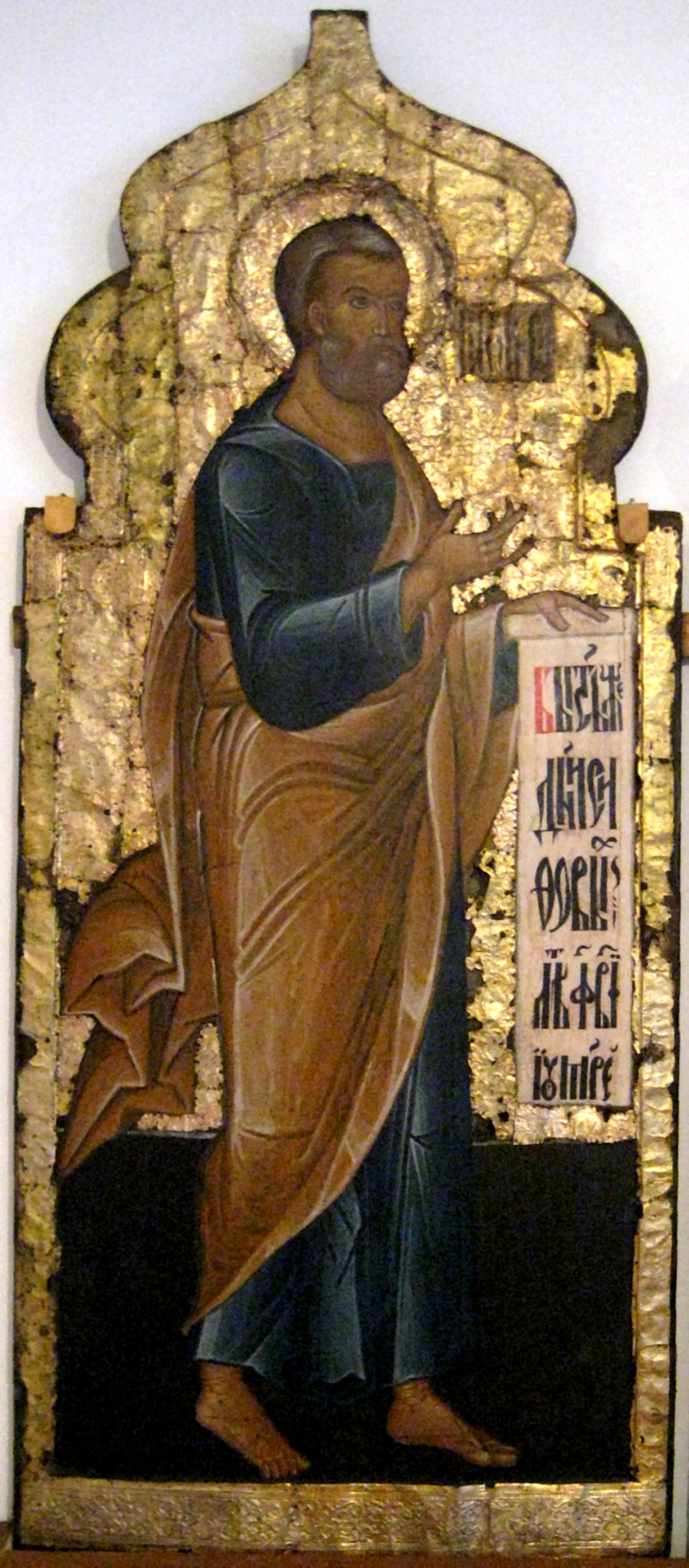
ANCIENTS-Photo-Seth.jpg
Biography
Seth was born in 4134 BCE 131 Anno Mundi in Genesis 4:2. He and Azura were married in 4033 BCE 231 Anno Mundi (Azura and Seth were siblings.) He died in 3222 BCE, at age ~912, 1043 Anno Mundi in Genesis 5:8. He was buried in 3222 BCE in Al-Nabi Shayth, Bekaa Valley, Lebanon, (according to some Muslim belief.)
Facts
Seth was affiliated with Judaism. He had reference number 44.
Citations
- [S2] John O'Hart, Irish Pedigrees or Origin and Stem of The Irish Nation, Source Medium: Book
Source Quality: Good
Much of the Biblical genealogy is a stratight lift from the Bible and while the following characters are generally known to exist there are disputes with O'Hart on order and dates. For its time this was a scholarly work but the various source historical documents do provide confusion themselves., 44
Heber Fionn1
M, #45, d. 1698 BCE
| References | Heremon Line 1 - Heber Glunfionn to Oilioll Aolcheoin Kings My Ancestors |
Parents
| Pedigree Link |
Family
Biography
Facts
Heber Fionn was also known as Eber. He was affiliated with Pagan. He was King of Ireland in IrelandG.3 He had reference number 45. Reigned with his brother Heremon as the first Monarchs of Ireland. They began their reign in 1699 BC. After Heber's death, at Heremon's hand, Heremon reigned until 1683 BC.
From Heber, the eldest brother, the provincial Kings of Munster (of whom thirty-eight were sole Monarchs of Ireland), and most of the nobility and gentry of Munster, and many noble families in Scotland, are descended.
From Heber, the eldest brother, the provincial Kings of Munster (of whom thirty-eight were sole Monarchs of Ireland), and most of the nobility and gentry of Munster, and many noble families in Scotland, are descended.
Citations
- [S2] John O'Hart, Irish Pedigrees or Origin and Stem of The Irish Nation, Source Medium: Book
Source Quality: Good
Much of the Biblical genealogy is a stratight lift from the Bible and while the following characters are generally known to exist there are disputes with O'Hart on order and dates. For its time this was a scholarly work but the various source historical documents do provide confusion themselves., 50-55, 63 - [S1] Peter Berresford Ellis, A Dictionary of Irish Mythology, Source Medium: Book
£5.99 - [S3] John O'Hart, Irish Pedigrees or The Origin and Stem of The Irish Nation, Source Medium: Book
Source Quality: Good
Much of the Biblical genealogy is a stratight lift from the Bible and while the following characters are generally known to exist there are disputes with O'Hart on order and dates. For its time this was a scholarly work but the various source historical documents do provide confusion themselves., 640
Amergin1
M, #46, d. DECEASED
| References | Heremon Line 1 - Heber Glunfionn to Oilioll Aolcheoin My Ancestors |
Parents
| Pedigree Link |
Biography
Facts
Amergin was affiliated with Pagan. He had reference number 46. Amergin, son of Miled, was a Poet (file) and this is often synonymous with Druid. He was slain by Heremon dying without issue.
When the poet Amergin set foot upon the soil of Ireland it is said that he chanted a strange and mystical lay:
"I am the Wind that blows over the sea,
I am the Wave of the Ocean;
I am the murmur of the billows;
I am the Ox of the Seven Combats;
I am the Vulture upon the rock;
I am a Ray of the Sun;
I am the fairest of Plants;
I am a Wild Boar in Valour;
I am a Salmon in the Water;
I am a Lake in the plain;
I am the Craft of the artificer;
I am a Word of Science;
I am the Spear-point that gives battle;
I am the god that creates in the head of man the fire of thought.
Who is it that enlightens the assembly upon the mountain, if not I?
Who telleth the ages of the moon, if not I?
Who showeth the place where the sun goes to rest, if not I?"
Two other poems are attributed to Amergin, in which he invokes the land and physical features of Ireland to aid him:
"I invoke the land of Ireland,
Shining, shining sea;
Fertile, fertile Mountain;
Gladed, gladed wood!
Abundant river, abundant in water!
Fish-abounding lake!"
(Both Poems are from translations by De Jubainvile in "Irish Mythological Cycle")
-
The Milesian host, after landing (in Ireland), advance to Tara, where they find the three kings of the Danaans awaiting them, and summon them to deliver up the island. The Danaans ask for three days' time to consider whether they shall quit Ireland, or submit, or give battle; and they propose to leave the decision, upon their request, to Amergin. Amergin pronounces judgement - "the first judgement which was delivered in Ireland." He agrees that the Milesians must not take their foes by surprise-they are to withdraw the length of nine waves from the shore, and then return; if they then conquer the Danaans the land is to be fairly theirs by right of battle.
The Milesians submit to this decision and embark on their ships. But no sooner have they drawn off for the mystical distance of the nine waves than a mist and storm are raised by the sorceries of the Danaans-the coast of Ireland is hidden from their sight, and they wonder dispersed upon the ocean. To ascertain if it is a natural or Druidic tempest which afflicts them, a man named Aranan is sent up to the masthead to see if the wind is blowing there also or not. He is flung from the swaying mast, but as he falls to his death he cries his message to his shipmates: "There is no storm aloft". Amergin, who takes lead in all critical situations, thereupon chants his incantation to the land of Erin. The wind falls, and they turn their prows, rejoicing, towards the shore.
A great battle with the Danaans at Telltown (named after the goddess Telta) then follows. The three kings and three queens of the Danaans, with many of their people, are slain, and the children of Miled-the last of the mythical invaders of Ireland-enter upon the sovereignty of Ireland. But the people of Dana do not withdraw. By their magic art they cast over themselves a veil of invisibility, which they can put on or off as they choose. There are two Irelands henceforward, the spiritual and the earthly. The Danaans dwell in the spiritual Ireland which is portioned out among them by their great overlord, the Dagda. Where the human eye can see but green mounds and ramparts, the relics of ruined fortresses or sepulchres, there rise fairy palaces of the defeated divinities; there they hold revels in eternal sunshine, nourished by the magic meat and ale that give them undying youth and beauty; and thence they come forth at times to mingle with mortal men in love or in war. The ancient mythical literature conceives them as heroic and splendid in strength and beauty. In later times, and as Christian influences grew stronger, they dwindle into fairies, the People of the Sidhe (pronounced 'Shee'. It means literally the People of the [Fairy] Mounds); but they have never wholly perished; to this day the Land of Youth and its inhabitants live in the imagination of the Irish peasant.
('Celtic - Myths and Legends - T W Rolleston [Senate Press].)
When the poet Amergin set foot upon the soil of Ireland it is said that he chanted a strange and mystical lay:
"I am the Wind that blows over the sea,
I am the Wave of the Ocean;
I am the murmur of the billows;
I am the Ox of the Seven Combats;
I am the Vulture upon the rock;
I am a Ray of the Sun;
I am the fairest of Plants;
I am a Wild Boar in Valour;
I am a Salmon in the Water;
I am a Lake in the plain;
I am the Craft of the artificer;
I am a Word of Science;
I am the Spear-point that gives battle;
I am the god that creates in the head of man the fire of thought.
Who is it that enlightens the assembly upon the mountain, if not I?
Who telleth the ages of the moon, if not I?
Who showeth the place where the sun goes to rest, if not I?"
Two other poems are attributed to Amergin, in which he invokes the land and physical features of Ireland to aid him:
"I invoke the land of Ireland,
Shining, shining sea;
Fertile, fertile Mountain;
Gladed, gladed wood!
Abundant river, abundant in water!
Fish-abounding lake!"
(Both Poems are from translations by De Jubainvile in "Irish Mythological Cycle")
-
The Milesian host, after landing (in Ireland), advance to Tara, where they find the three kings of the Danaans awaiting them, and summon them to deliver up the island. The Danaans ask for three days' time to consider whether they shall quit Ireland, or submit, or give battle; and they propose to leave the decision, upon their request, to Amergin. Amergin pronounces judgement - "the first judgement which was delivered in Ireland." He agrees that the Milesians must not take their foes by surprise-they are to withdraw the length of nine waves from the shore, and then return; if they then conquer the Danaans the land is to be fairly theirs by right of battle.
The Milesians submit to this decision and embark on their ships. But no sooner have they drawn off for the mystical distance of the nine waves than a mist and storm are raised by the sorceries of the Danaans-the coast of Ireland is hidden from their sight, and they wonder dispersed upon the ocean. To ascertain if it is a natural or Druidic tempest which afflicts them, a man named Aranan is sent up to the masthead to see if the wind is blowing there also or not. He is flung from the swaying mast, but as he falls to his death he cries his message to his shipmates: "There is no storm aloft". Amergin, who takes lead in all critical situations, thereupon chants his incantation to the land of Erin. The wind falls, and they turn their prows, rejoicing, towards the shore.
A great battle with the Danaans at Telltown (named after the goddess Telta) then follows. The three kings and three queens of the Danaans, with many of their people, are slain, and the children of Miled-the last of the mythical invaders of Ireland-enter upon the sovereignty of Ireland. But the people of Dana do not withdraw. By their magic art they cast over themselves a veil of invisibility, which they can put on or off as they choose. There are two Irelands henceforward, the spiritual and the earthly. The Danaans dwell in the spiritual Ireland which is portioned out among them by their great overlord, the Dagda. Where the human eye can see but green mounds and ramparts, the relics of ruined fortresses or sepulchres, there rise fairy palaces of the defeated divinities; there they hold revels in eternal sunshine, nourished by the magic meat and ale that give them undying youth and beauty; and thence they come forth at times to mingle with mortal men in love or in war. The ancient mythical literature conceives them as heroic and splendid in strength and beauty. In later times, and as Christian influences grew stronger, they dwindle into fairies, the People of the Sidhe (pronounced 'Shee'. It means literally the People of the [Fairy] Mounds); but they have never wholly perished; to this day the Land of Youth and its inhabitants live in the imagination of the Irish peasant.
('Celtic - Myths and Legends - T W Rolleston [Senate Press].)
Citations
- [S2] John O'Hart, Irish Pedigrees or Origin and Stem of The Irish Nation, Source Medium: Book
Source Quality: Good
Much of the Biblical genealogy is a stratight lift from the Bible and while the following characters are generally known to exist there are disputes with O'Hart on order and dates. For its time this was a scholarly work but the various source historical documents do provide confusion themselves., 50-55, 63 - [S1] Peter Berresford Ellis, A Dictionary of Irish Mythology, Source Medium: Book
£5.99
Irial Faidh Heremon1
M, #47, d. 1670 BCE
| References | Heremon Line 1 - Heber Glunfionn to Oilioll Aolcheoin Kings My Ancestors |
Parents
| Father* | Heremon (d. 1683 BCE) |
| Pedigree Link |
Family
Family:
| Son* | Eithrial Heremon+ (b. about 1695 BCE, d. 1650 BCE) |
Biography
Irial Faidh Heremon died in 1670 BCE in IrelandG.1 He was buried in 1670 BCE in IrelandG, Magh Mugh.1
Facts
Irial Faidh Heremon held the title King of Ireland. He was affiliated with Pagan.2 He had reference number 47. Irial Faidh (Faidh= Irish a prophet) son of Heremon, was 10th Monarch of Ireland. This was a very learned King; could foretell things to come; and caused much of the country to be cleared of ancient forests. He likewise built seven royal palaces, viz., Rath Ciombaoith, Rath Coincheada, Rath Mothuig, Rath Buirioch, Rath Luachat, Rath Croicne and Rath Boachoill. He won four remarkable battles over his enemies:- Ard Inmath, at Teabtha, where Stirne, the son of Dubh, son of Fomhar, was slain; the second battle was at Teanmhuighe against Fomhoraice, where Eichtghe, their leader was slain; the third was the battle of Loch Muighe, where Lugrot, the son of Moghfeibhis, was slain; and the fourth was the battle of Cuill Martho, where the four sons of Heber were defeated. Irial died in the second year after this battle, having reigned 10 years, and was buried at Magh Muagh. (Irish Pedigrees by John O'Hart, fifth edition 1892- James Duffy & Co. Ltd. Dublin.) He was King of Ireland in IrelandG, between 1680 BCE and 1670 BCE.3
Citations
- [S2] John O'Hart, Irish Pedigrees or Origin and Stem of The Irish Nation, Source Medium: Book
Source Quality: Good
Much of the Biblical genealogy is a stratight lift from the Bible and while the following characters are generally known to exist there are disputes with O'Hart on order and dates. For its time this was a scholarly work but the various source historical documents do provide confusion themselves., 352 - [S2] John O'Hart, Irish Pedigrees or Origin and Stem of The Irish Nation, 59
- [S3] John O'Hart, Irish Pedigrees or The Origin and Stem of The Irish Nation, Source Medium: Book
Source Quality: Good
Much of the Biblical genealogy is a stratight lift from the Bible and while the following characters are generally known to exist there are disputes with O'Hart on order and dates. For its time this was a scholarly work but the various source historical documents do provide confusion themselves., 640
Eithrial Heremon1
M, #48, b. about 1695 BCE, d. 1650 BCE
| References | Heremon Line 1 - Heber Glunfionn to Oilioll Aolcheoin Kings My Ancestors |
Parents
| Father* | Irial Faidh Heremon (d. 1670 BCE) |
| Pedigree Link |
Family
Family:
| Son* | Foll-Aich Heremon+ (d. DECEASED) |


ANCIENTS-Map-Ireland-003-Four-Kingdoms-01.jpg
Biography
Eithrial Heremon was born about 1695 BCE. He died in 1650 BCE in Soirrean, Leinster, Ireland, Slain by Conmaol, the son of Heber Fionn, at Battle of Soirrean.1
Facts
Eithrial Heremon held the title King of Ireland.1 He was affiliated with Pagan.2 He had reference number 48. Eithrial, son of Irial Faidh, of the Line of Heremon, was the 11th Monarch of Ireland; reigned 20 years and was slain by Conmaol, the son of Heber Fionn, at the battle of Soirrean, in Leinster, 1650 BC. This was a learned King; he wrote, with his own hand, "The History of the Gaels" (or Gadelians); in his reign seven large woods were cleared and much advance made in the practice of agriculture. (Irish Pedigrees by John O'Hart, fifth edition 1892- James Duffy & Co. Ltd. Dublin.) He was King of Ireland in IrelandG, between 1670 BCE and 1650 BCE.3,1
Citations
- [S2] John O'Hart, Irish Pedigrees or Origin and Stem of The Irish Nation, Source Medium: Book
Source Quality: Good
Much of the Biblical genealogy is a stratight lift from the Bible and while the following characters are generally known to exist there are disputes with O'Hart on order and dates. For its time this was a scholarly work but the various source historical documents do provide confusion themselves., 352 - [S2] John O'Hart, Irish Pedigrees or Origin and Stem of The Irish Nation, 59
- [S5] Margaret E Dobbs, Women of the Ui Dunlainge of Leinster, Source Medium: Book
Source Quality: Good
The subject of this paper is a document imbedded in the gelealogies of Leinster. From internal evidence it is a composition begun in the eighth century. The language is Middle Irish. It has been preserved in the following MSS:
Book of Leinster, facs. 316a. Compiled circa 110-1200.
D.2.I.fols. 57v and 96 (RIA). Compiled circa 1400.
Book of Ballymote, facs. p.132. Compiled circa 1407.
Book of Lecan, facs. 91b. Compiled circa 1417.
It does not appear in Rawl. B.502 or H.2.7 (TCD)
It is a list of ladies, wives and daughters of leading families in North Leinster. Th eperiod is from 500AD to 800AD. Such a list is unusual. There appears to be only one other instance in the Tethba genealogies (Ban-shencus in Lecan 205vb, 211b). It also refers to an early period. Other such lists probably existed as the Ban-shencus gives many women not in the Annals or surviving MSS.
This particular list is in the section "Sil Fiachach Ba Aiccid." This includes the Ui Cennselaig and the Ui Dunlainge who were the dominant branches of the Sil Fiachach in Leinster, the former in the south, the latter in the north of the province. The list occurs in the Ui Dunlainge genealogies. A common ancestor of both branches, Bresal Belach, is the first Irish name entered in the Annals of Ulster in 435AD (although Professor McNeill considers this a misdating from evidence of Book of Armagh). The Ui Dulainge territory lay in Co. Kildare and parts of Wicklow and Carlow. The chief stronhold of the Ui Dunlainge seems to have been Naas. After 800AD their royal family were known as Ui Muirdaig. Later still the chief surname was Ui Tuathail.
Dobbs uses dates based non the Annals of Ulster (AU) and Annals of the Four Masters (AFM) and other sources (the ancients did not use BC or AD!), 200
Foll-Aich Heremon1
M, #49, d. DECEASED
| References | Heremon Line 1 - Heber Glunfionn to Oilioll Aolcheoin My Ancestors |
Parents
| Father* | Eithrial Heremon (b. about 1695 BCE, d. 1650 BCE) |
| Pedigree Link |
Family
Family:
| Son* | Tighernmas Heremon+ (d. 1543 BCE) |
Biography
Foll-Aich Heremon died DECEASED in Ireland.
Facts
Foll-Aich Heremon was affiliated with Pagan.2 He had reference number 49. Foll-Aich, son of Eithrial, of the Line of Heremon, was kept out of the Monarchy by Conmaol the Slayer of his father, who usurped his place. (Irish Pedigrees by John O'Hart, fifth edition 1892- James Duffy & Co. Ltd. Dublin.)
Citations
- [S2] John O'Hart, Irish Pedigrees or Origin and Stem of The Irish Nation, Source Medium: Book
Source Quality: Good
Much of the Biblical genealogy is a stratight lift from the Bible and while the following characters are generally known to exist there are disputes with O'Hart on order and dates. For its time this was a scholarly work but the various source historical documents do provide confusion themselves., 352 - [S2] John O'Hart, Irish Pedigrees or Origin and Stem of The Irish Nation, 59
Tighernmas Heremon1
M, #50, d. 1543 BCE
| References | Heremon Line 1 - Heber Glunfionn to Oilioll Aolcheoin Kings My Ancestors |
Parents
| Father* | Foll-Aich Heremon (d. DECEASED) |
| Pedigree Link |
Family
Family:
| Son* | Enboath Heremon+ (d. DECEASED) |
Biography
Tighernmas Heremon was born in Ireland. He died in 1543 BCE in Fenagh, Mohill, Leitrim, Ireland, Magh Sleaght.1
Facts
Tighernmas Heremon was also known as Tiernmas. He held the title King of Ireland. He was affiliated with Pagan.1 He had reference number 50. He held the title Lord of Death.2 Tigernmas. Son of Follach. The name signifies "Lord of death". In King lists he is given as the twenty-sixth High King, either being fifth or eighth after Eremon, the first Milesian ruler. He is said to have found the first gold mine in Ireland, and to have introduced silver-work and variegated colours in the clothing of his people, i.e. the tartan. The number of colours varied and went up according to rank. He is also recorded as having introduced the worship of an idol called "Cromm Croich" or "Cromm Cruach" (Bloody Crescent)(1) which involved human sacrifice. The idol was worshipped on the Plain of Adoration (Magh Slecht) on the feast of Samhain(2). Tigernmas was mysteriously slain during the frenzied worship of the idol. ['A Dictionary of Irish Mythology' - Peter Berresford Ellis. Oxford University Press (1991)]
Tigernmas (or Tiernmas) was the son of Foll-Aich, of the Line of Heremon, was the 13th Monarch of Ireland and reigned for 77 years from 1620 BC. (Although according to Keating he reigned 50 years). He fought twenty-seven battles with followers of the family of Heber Fionn, all which he gained. In his reign gold was mined near the River Liffey and skillfully worked by 'Inchadhan.' This King also made a law that each grade of society should be known by the number of colours in its wearing apparel:- the clothes of a slave should be of one colour; those of a soldier two (according to Keating two was for a plebeian); the dress of a commanding officer to be of three colours (Keating states three were for a soldier or young lord); a gentlemen's dress, who kept a table for the free entertainment of strangers, to be of four colours (Keating says that four colours were reserved for a brughaidh or public victualler); five colours to be allowed for nobility or the chiefs (Keating states five is for the lord of a tuath or cantred); and the King, Queen, and Royal Family, as well as the Druids, historians, and other learned men to wear six colours (Keating states six is for an ollamh or chief professor of any liberal arts, and that of King and Queen). This information is taken from the ancient 'Book of Rights'. It is believed that this mode of dress may be the origin of the Scotch plaid.
This King died, 1543 BC, on the Eve of 1st November, with two-thirds of his people of Ireland, at Magh Sleaght (or Field of Adoration), now 'Fenagh' in the Barony of Mohill, in the county of Leitrim, as he was adoring the Sun-God, 'Crom Cruach' (a quo Macroom) literally 'the crooked heap'. Historians say this Monarch was the first to introduce image worship in Ireland. This idol of Crom Cruach was worshipped up to the time of St. Patrick, by whom he was destroyed. (Irish Pedigrees by John O'Hart, fifth edition 1892- James Duffy & Co. Ltd. Dublin)
He is said to have introduced into Ireland the worship of Crom Cruach, on Moyslaught (The Plain of Adoration) and to have perished himself with three-fourths of his people while worshipping this idol on November Eve, the period when the reign of Winter was inaugurated. Crom Cruach was no doubt a solar deity, but no figure at all resembling him can be identified among the Danaan divinities. Tiernmas also, it is said, found the first gold mine in Ireland, and introduced variegated colours into the clothing of people. A slave might wear one colour, a peasant two, a soldier three, a wealthy landowner four, a provincial chief five, and an Ollav, or royal person, six. Ollav was a term applied to a certain Druidic rank; it meant much the same as 'doctor', in the sense of a learned man-a master of science. It is a characteristic trait that the Ollav is endowed with a distinction equal to that of a king. ('Celtic - Myths and Legends - T W Rolleston [Senate Press])
1. "Cromm Cruach". Sometimes Crom Croich. An early golden idol who was reported to have twelve gods who served him. ['A Dictionary of Irish Mythology' - Peter Berresford Ellis. Oxford University Press (1991)]
2. "Feis na Samhain" (Feist of Samhain). One of the four major pre-Christian festivals. It was held on the evening of 31 October into the following day, 1 November. It marked the end of one pastoral year and the commencement of the next. It was also an intensely spiritual time for it was the period when the Otherworld became visible to mankind and when spiritual forces were let loose on the human world. Christianity took this pagan festival over as Harvest Festival. The feast became St. Martin's Mass (Martinmas). The festival also became All Saint's Day or All-Hallows and the evening prior was Hallowe'en, still celebrated as the night when spirits and ghosts set out to wreak vengeance on the living and when evil marches unbridled across the world. In Ireland, as in other Celtic countries, the fires were extinguished and could only be rekindled from a ceremonial fire lit by druids at Samhain on Tlachtga (now the Hill of Ward). Significant events always occurred on Samhain in myth. It was the time when the Formorii oppressed the people of Nemed and when the De Danaan defeated the Formorii at the second Battle of Magh Tuireadh. ['A Dictionary of Irish Mythology' - Peter Berresford Ellis. Oxford University Press (1991)]. He was King of Ireland in IrelandG, between 1620 BCE and 1543 BCE.3
Tigernmas (or Tiernmas) was the son of Foll-Aich, of the Line of Heremon, was the 13th Monarch of Ireland and reigned for 77 years from 1620 BC. (Although according to Keating he reigned 50 years). He fought twenty-seven battles with followers of the family of Heber Fionn, all which he gained. In his reign gold was mined near the River Liffey and skillfully worked by 'Inchadhan.' This King also made a law that each grade of society should be known by the number of colours in its wearing apparel:- the clothes of a slave should be of one colour; those of a soldier two (according to Keating two was for a plebeian); the dress of a commanding officer to be of three colours (Keating states three were for a soldier or young lord); a gentlemen's dress, who kept a table for the free entertainment of strangers, to be of four colours (Keating says that four colours were reserved for a brughaidh or public victualler); five colours to be allowed for nobility or the chiefs (Keating states five is for the lord of a tuath or cantred); and the King, Queen, and Royal Family, as well as the Druids, historians, and other learned men to wear six colours (Keating states six is for an ollamh or chief professor of any liberal arts, and that of King and Queen). This information is taken from the ancient 'Book of Rights'. It is believed that this mode of dress may be the origin of the Scotch plaid.
This King died, 1543 BC, on the Eve of 1st November, with two-thirds of his people of Ireland, at Magh Sleaght (or Field of Adoration), now 'Fenagh' in the Barony of Mohill, in the county of Leitrim, as he was adoring the Sun-God, 'Crom Cruach' (a quo Macroom) literally 'the crooked heap'. Historians say this Monarch was the first to introduce image worship in Ireland. This idol of Crom Cruach was worshipped up to the time of St. Patrick, by whom he was destroyed. (Irish Pedigrees by John O'Hart, fifth edition 1892- James Duffy & Co. Ltd. Dublin)
He is said to have introduced into Ireland the worship of Crom Cruach, on Moyslaught (The Plain of Adoration) and to have perished himself with three-fourths of his people while worshipping this idol on November Eve, the period when the reign of Winter was inaugurated. Crom Cruach was no doubt a solar deity, but no figure at all resembling him can be identified among the Danaan divinities. Tiernmas also, it is said, found the first gold mine in Ireland, and introduced variegated colours into the clothing of people. A slave might wear one colour, a peasant two, a soldier three, a wealthy landowner four, a provincial chief five, and an Ollav, or royal person, six. Ollav was a term applied to a certain Druidic rank; it meant much the same as 'doctor', in the sense of a learned man-a master of science. It is a characteristic trait that the Ollav is endowed with a distinction equal to that of a king. ('Celtic - Myths and Legends - T W Rolleston [Senate Press])
1. "Cromm Cruach". Sometimes Crom Croich. An early golden idol who was reported to have twelve gods who served him. ['A Dictionary of Irish Mythology' - Peter Berresford Ellis. Oxford University Press (1991)]
2. "Feis na Samhain" (Feist of Samhain). One of the four major pre-Christian festivals. It was held on the evening of 31 October into the following day, 1 November. It marked the end of one pastoral year and the commencement of the next. It was also an intensely spiritual time for it was the period when the Otherworld became visible to mankind and when spiritual forces were let loose on the human world. Christianity took this pagan festival over as Harvest Festival. The feast became St. Martin's Mass (Martinmas). The festival also became All Saint's Day or All-Hallows and the evening prior was Hallowe'en, still celebrated as the night when spirits and ghosts set out to wreak vengeance on the living and when evil marches unbridled across the world. In Ireland, as in other Celtic countries, the fires were extinguished and could only be rekindled from a ceremonial fire lit by druids at Samhain on Tlachtga (now the Hill of Ward). Significant events always occurred on Samhain in myth. It was the time when the Formorii oppressed the people of Nemed and when the De Danaan defeated the Formorii at the second Battle of Magh Tuireadh. ['A Dictionary of Irish Mythology' - Peter Berresford Ellis. Oxford University Press (1991)]. He was King of Ireland in IrelandG, between 1620 BCE and 1543 BCE.3
Citations
- [S2] John O'Hart, Irish Pedigrees or Origin and Stem of The Irish Nation, Source Medium: Book
Source Quality: Good
Much of the Biblical genealogy is a stratight lift from the Bible and while the following characters are generally known to exist there are disputes with O'Hart on order and dates. For its time this was a scholarly work but the various source historical documents do provide confusion themselves., 352 - [S1] Peter Berresford Ellis, A Dictionary of Irish Mythology, Source Medium: Book
£5.99 - [S3] John O'Hart, Irish Pedigrees or The Origin and Stem of The Irish Nation, Source Medium: Book
Source Quality: Good
Much of the Biblical genealogy is a stratight lift from the Bible and while the following characters are generally known to exist there are disputes with O'Hart on order and dates. For its time this was a scholarly work but the various source historical documents do provide confusion themselves., 640
|
This is a free site without advertisements |
   |
 |
Compiler: Brian Thomas Dowling (1955-)
Page created by John Cardinal's GedSite v3.07 | Based on a design by Contented Designs