Dowling One Name Study
Person Page 10
Brian Leth-dearg1
M, #226, d. DECEASED
| References | O'TOOL (No.1) - Fiacha Baicheda to MacMorough Eanna Cinsealach |
Parents
| Father* | Enna Niadh O'Toole-No.1 (d. DECEASED) |
| Pedigree Link |
Family
Family:
| Son* | Feidhlimidh+ (d. DECEASED) |
Biography
Brian Leth-dearg was born in Ireland. He died DECEASED in Ireland.
Facts
Brian Leth-dearg had reference number 226. Brian Leth-dearg, a quo Ui Briuin Cualan (or O'Brien of Cualan), son of Enna Niadh. (Irish Pedigrees or The Origin and Stem of The Irish Nation by James O'Hart published in 1892 by James Duffy & Co. Ltd. Dublin).
Citations
- [S3] John O'Hart, Irish Pedigrees or The Origin and Stem of The Irish Nation, Source Medium: Book
Source Quality: Good
Much of the Biblical genealogy is a stratight lift from the Bible and while the following characters are generally known to exist there are disputes with O'Hart on order and dates. For its time this was a scholarly work but the various source historical documents do provide confusion themselves., 761
Finn MacCoole
M, #227
| References | O'Connor Faley (No. 8) - Laeghaire Lorc to Fiacha Baicheda Warriors |
Parents
| Father* | Cabhall Coole (d. DECEASED) |
| Pedigree Link |
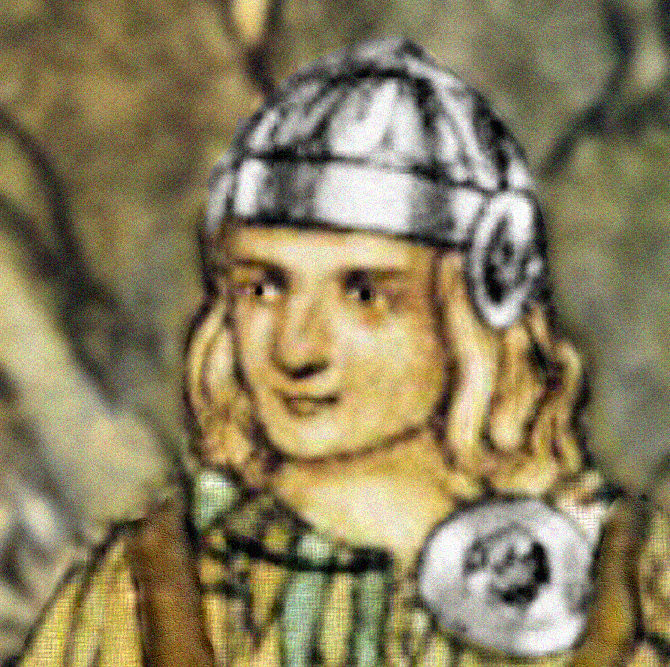

Portrait-Finn-Mccool-Comes-to-Aid-the-Fianna


Photo-Finn-heard-far-off-the-first-notes-of-the-fairy-harp


Photo-Finn-Mccool-Comes-to-Aid-the-Fianna


Photo-Macoole-Finn-Heroes-of-the-dawn-(1914)-(14750481494)


Photo-Macoole-Finn-Heroes-of-the-dawn-(1914)-(14566385007)
Biography
Finn MacCoole was born in Ireland. He died in Ireland.
Facts
Finn MacCoole was also known as Fionn mac Cumhaill. He was affiliated with Pagan. He was a Soldier; General of the Fenians in Ireland.1 He had reference number 227. Fionn mac Cumhaill (/ˈfɪn məˈkuːl/ fin mək-KOOL;[a] Old and Middle Irish: Find or Finn[1][2] mac Cumail or Umaill, usually rendered as Finn McCool or Finn MacCool in English) was an Irish mythical hunter-warrior in Irish mythology, occurring also in the mythologies of Scotland and the Isle of Man. The stories of Fionn and his followers the Fianna, form the Fenian Cycle (an Fhiannaíocht), much of it narrated in the voice of Fionn's son, the poet Oisín.
Etymology
In Old Irish, finn/find means "white, bright, lustrous; fair, light-hued (of complexion, hair, etc.); fair, handsome (often, but not necessarily, implying fairness of complexion); bright, blessed; in moral sense, fair, just, true".[3] It is cognate with Proto-Irish VENDO- (found in names from Ogam inscriptions), Welsh gwyn, Cornish gwen, Breton gwenn, Continental Celtic and Brittonic *uindo- (a common element in personal and place names), and comes from the Proto-Celtic adjective masculine singular *windos (likely derived from the Proto-Indo-European root *weyd- "to know, to see").[4][5]
Birth
Most of Fionn's early adventures are recounted in the narrative The Boyhood Deeds of Fionn. He was the son of Cumhall, leader of the Fianna, and Muirne, daughter of the druid Tadg mac Nuadat who lived on the hill of Almu in County Kildare. Cumhall abducted Muirne after her father refused him her hand, so Tadg appealed to the High King, Conn of the Hundred Battles, who outlawed Cumhall. The Battle of Cnucha was fought between Conn and Cumhall, and Cumhall was killed by Goll mac Morna, who took over leadership of the Fianna. Fionn Mac Cumhaill was said to be originally from Ballyfin,[citation needed] in Laois. The direct translation of Ballyfin from Irish to English is "town of Fionn".
Muirne was already pregnant; her father rejected her and ordered his people to burn her, but Conn would not allow it and put her under the protection of Fiacal mac Conchinn, whose wife, Bodhmall the druid, was Cumhall's sister. In Fiacal's house Muirne gave birth to a son, whom she called Deimne (/ˈdeɪni/; Irish pronunciation: [dʲeβ̃nʲi]),[6] literally "sureness" or "certainty", also a name that means a young male deer; several legends tell how he gained the name Fionn when his hair turned prematurely white.
Boyhood
Muirne left the boy in the care of Bodhmall and a fighting woman, Liath Luachra, and they brought him up in secret in the forest of Sliabh Bladma, teaching him the arts of war and hunting. As he grew older he entered the service - incognito - of a number of local kings, but each one, when he recognised Fionn as Cumhal's son, told him to leave, fearing they would be unable to protect him from his enemies.
The young Fionn met the leprechaun-like druid and poet Finn Eces, or Finnegas, near the river Boyne and studied under him. Finnegas had spent seven years trying to catch the Salmon of Knowledge, which lived in a pool on the Boyne and became all-knowing through its diet of hazelnuts from a holy tree: whoever ate the salmon would gain all the knowledge in the world. Eventually the old man caught it, and told the boy to cook it for him. While cooking it Deimne burned his thumb, and instinctively put his thumb in his mouth. This imbued him with the salmon's wisdom, and when Finn Eces saw that he had gained wisdom, he gave young Fionn the whole salmon to eat. Fionn then knew how to gain revenge against Goll, and in subsequent stories was able to call on the knowledge of the salmon by putting his thumb to the tooth that had first tasted the salmon.[7] The story of Fionn and the salmon of knowledge and the Welsh tale of Gwion Bach are similar.
Adulthood
In a story from Violet Russell's Heroes of the Dawn, every year for 23 years at Samhain, a fire-breathing man of the Tuatha Dé Danaan, Aillen the Burner, would lull the men of Tara to sleep with his music before burning the palace to the ground, and the Fianna, led by Goll mac Morna, were powerless to prevent it. The Fianna were a band of warriors also known as a military order composed mainly of the members of two clans, "Clan Bascna" and "Clan Morna", the Fenians were supposed to be devoted to the service of the High King and to the repelling of foreign invaders.[8] Fionn arrived at Tara, armed with his father's crane-skin bag of magical weapons. He kept himself awake by touching the point of his magically red-hot spear to his forehead. The pain kept Fionn awake, allowing him to pursue and kill Aillen with the same spear. After that his heritage was recognised and he was given command of the Fianna: Goll willingly stepped aside, and became a loyal follower of Fionn, although in some stories their alliance is uneasy. Fionn demanded compensation for his father's death from Tadg, threatening war or single combat against him if he refused. Tadg offered him his home, the hill of Allen, as compensation, which Fionn accepted.
Fionn's sword was called "Mac an Luinn".[9]
Love life
Fionn met his most famous wife, Sadhbh, when he was out hunting. She had been turned into a deer by a druid, Fear Doirich, whom she had refused to marry. Fionn's hounds, Bran and Sceólang, born of a human enchanted into the form of a hound, recognised her as human, and Fionn brought her home. She transformed back into a woman the moment she set foot on Fionn's land, as this was the one place she could regain her true form. She and Fionn married and she was soon pregnant. When Fionn was away defending his country, Fear Doirich (literally meaning Dark Man) returned and turned her back into a deer, whereupon she vanished. Fionn spent years searching for her, but to no avail. Bran and Sceólang, again hunting, found her son, Oisín, in the form of a fawn; he transformed into a child, and went on to be one of the greatest of the Fianna.
In The Pursuit of Diarmuid and Gráinne the High King Cormac mac Airt promises the aging Fionn his daughter Gráinne, but at the wedding feast Gráinne falls for one of the Fianna, Diarmuid Ua Duibhne, noted for his beauty. She forces him to run away with her and Fionn pursues them. The lovers are helped by the Fianna, and by Diarmuid's foster-father, the god Aengus. Eventually Fionn makes his peace with the couple. Years later, however, Fionn invites Diarmuid on a boar hunt, and Diarmuid is gored. Water drunk from Fionn's hands has the power of healing, but each time Fionn gathers water he lets it run through his fingers before he gets back to Diarmuid. His grandson Oscar shames Fionn, but when he finally returns with water it is too late; Diarmuid has died.
Death
According to the most popular account of Fionn's death, he is not dead at all, rather, he sleeps in a cave, surrounded by the Fianna. One day he will awake and defend Ireland in the hour of her greatest need. In one account, it is said that he will arise when the Dord Fiann, the hunting horn of the Fianna, is sounded three times, and he will be as strong and as well as he ever was.
Popular folklore
Many geographical features in Ireland are attributed to Fionn. Legend has it he built the Giant's Causeway as stepping-stones to Scotland, so as not to get his feet wet; he also once scooped up part of Ireland to fling it at a rival, but it missed and landed in the Irish Sea - the clump became the Isle of Man and the pebble became Rockall, the void became Lough Neagh. In Ayrshire, Scotland a common myth is that Ailsa Craig, a small islet just off coast of the said county, is another rock thrown at the fleeing Benandonner. The islet being referred to as paddys' mile stone in Ayrshire. Fingal's Cave in Scotland is also named after him, and shares the feature of hexagonal basalt columns with the nearby Giant's Causeway in Northern Ireland.
In both Irish and Manx popular folklore,[10] Fionn mac Cumhail (known as "Finn McCool" or "Finn MacCooill" respectively) is portrayed as a magical, benevolent giant. The most famous story attached to this version of Fionn tells of how one day, while making a pathway in the sea towards Scotland - The Giant's Causeway - Fionn is told that the giant Benandonner (or, in the Manx version, a buggane) is coming to fight him. Knowing he cannot withstand the colossal Benandonner, Fionn asks his wife Oona to help him. She dresses her husband as a baby, and he hides in a cradle; then she makes a batch of griddle-cakes, hiding griddle-irons in some. When Benandonner arrives, Oona tells him Fionn is out but will be back shortly. As Benandonner waits, he tries to intimidate Oona with his immense power, breaking rocks with his little finger. Oona then offers Benandonner a griddle-cake, but when he bites into the iron he chips his teeth. Oona scolds him for being weak (saying her husband eats such cakes easily), and feeds one without an iron to the 'baby', who eats it without trouble.
In the Irish version, Benandonner is so awed by the power of the baby's teeth and the size of the baby that, at Oona's prompting, he puts his fingers in Fionn's mouth to feel how sharp his teeth are. Fionn bites Benandonner's little finger, and scared of the prospect of meeting his father considering the baby's size, Benandonner runs back towards Scotland across the Causeway smashing the causeway so Fionn couldn't follow him.
The Manx Gaelic version contains a further tale of how Fionn and the buggane fought at Kirk Christ Rushen. One of Fionn's feet carved out the channel between the Calf of Man and Kitterland, the other carved out the channel between Kitterland and the Isle of Man, and the buggane's feet opened up Port Erin. The buggane injured Fionn, who fled over the sea (where the buggane could not follow), however, the buggane tore out one of his own teeth and struck Fionn as he ran away. The tooth fell into the sea, becoming the Chicken Rock, and Fionn cursed the tooth, explaining why it is a hazard to sailors.
In Newfoundland, and some parts of Nova Scotia, "Fingal's Rising" is spoken of in a distinct nationalistic sense. Made popular in songs and bars alike, to speak of "Fingle," as his name is pronounced in English versus "Fion MaCool" in Newfoundland Irish, is sometimes used as a stand-in for Newfoundland or its culture.
Primary sources
01 Kuno Meyer, The Death of Finn Mac Cumaill in Zeitschrift für Celtische Philologie. Volume 1, Halle/Saale, Max Niemeyer (1897) page 462-465; http://www.ucc.ie/celt/published/G303003/index.html
02 Acallam na Senórach; Tales of the Elders, Whitley Stokes, Acallamh na Senórach in Irische Texte, Ed. Whitley Stokes and Ernst Windisch. series 4volume 1 (1900) pages xiv+1-438, http://www.ucc.ie/celt/published/G303000/index.html
03 Electronic Dictionary of the Irish Language, finn-1; dil.ie/22134
04 Matasovic, Ranko, Etymological Dictionary of Proto-Celtic, Brill, 2009, p. 423
05 Delamarre, Xavier, Dictionnaire de la langue gauloise, Editions Errance, 2003 (2nd ed.), p. 321.
06 Northern Irish: [dʲeβʲɨnʲɨ]; Southern Irish: [dʲəinʲɨ]
07 Llywelyn (1994)
08 Rolleston, T.W (2012). Celtic Myths and Legends. USA: dover publications. p. 252. ISBN 9780486265070.
09 "BBC Radio nan Gàidheal - Litir do Luchd-ionnsachaidh, Litir do Luchd-ionnsachaidh". BBC. Retrieved 27 October 2019.
10 Manx Fairy Tales, Peel, L. Morrison, 1929
11 Hanks, P; Hardcastle, K; Hodges, F (2006) [1990]. A Dictionary of First Names. Oxford Paperback Reference (2nd ed.). Oxford: Oxford University Press. pp. 402, 403. ISBN 978-0-19-861060-1.
Etymology
In Old Irish, finn/find means "white, bright, lustrous; fair, light-hued (of complexion, hair, etc.); fair, handsome (often, but not necessarily, implying fairness of complexion); bright, blessed; in moral sense, fair, just, true".[3] It is cognate with Proto-Irish VENDO- (found in names from Ogam inscriptions), Welsh gwyn, Cornish gwen, Breton gwenn, Continental Celtic and Brittonic *uindo- (a common element in personal and place names), and comes from the Proto-Celtic adjective masculine singular *windos (likely derived from the Proto-Indo-European root *weyd- "to know, to see").[4][5]
Birth
Most of Fionn's early adventures are recounted in the narrative The Boyhood Deeds of Fionn. He was the son of Cumhall, leader of the Fianna, and Muirne, daughter of the druid Tadg mac Nuadat who lived on the hill of Almu in County Kildare. Cumhall abducted Muirne after her father refused him her hand, so Tadg appealed to the High King, Conn of the Hundred Battles, who outlawed Cumhall. The Battle of Cnucha was fought between Conn and Cumhall, and Cumhall was killed by Goll mac Morna, who took over leadership of the Fianna. Fionn Mac Cumhaill was said to be originally from Ballyfin,[citation needed] in Laois. The direct translation of Ballyfin from Irish to English is "town of Fionn".
Muirne was already pregnant; her father rejected her and ordered his people to burn her, but Conn would not allow it and put her under the protection of Fiacal mac Conchinn, whose wife, Bodhmall the druid, was Cumhall's sister. In Fiacal's house Muirne gave birth to a son, whom she called Deimne (/ˈdeɪni/; Irish pronunciation: [dʲeβ̃nʲi]),[6] literally "sureness" or "certainty", also a name that means a young male deer; several legends tell how he gained the name Fionn when his hair turned prematurely white.
Boyhood
Muirne left the boy in the care of Bodhmall and a fighting woman, Liath Luachra, and they brought him up in secret in the forest of Sliabh Bladma, teaching him the arts of war and hunting. As he grew older he entered the service - incognito - of a number of local kings, but each one, when he recognised Fionn as Cumhal's son, told him to leave, fearing they would be unable to protect him from his enemies.
The young Fionn met the leprechaun-like druid and poet Finn Eces, or Finnegas, near the river Boyne and studied under him. Finnegas had spent seven years trying to catch the Salmon of Knowledge, which lived in a pool on the Boyne and became all-knowing through its diet of hazelnuts from a holy tree: whoever ate the salmon would gain all the knowledge in the world. Eventually the old man caught it, and told the boy to cook it for him. While cooking it Deimne burned his thumb, and instinctively put his thumb in his mouth. This imbued him with the salmon's wisdom, and when Finn Eces saw that he had gained wisdom, he gave young Fionn the whole salmon to eat. Fionn then knew how to gain revenge against Goll, and in subsequent stories was able to call on the knowledge of the salmon by putting his thumb to the tooth that had first tasted the salmon.[7] The story of Fionn and the salmon of knowledge and the Welsh tale of Gwion Bach are similar.
Adulthood
In a story from Violet Russell's Heroes of the Dawn, every year for 23 years at Samhain, a fire-breathing man of the Tuatha Dé Danaan, Aillen the Burner, would lull the men of Tara to sleep with his music before burning the palace to the ground, and the Fianna, led by Goll mac Morna, were powerless to prevent it. The Fianna were a band of warriors also known as a military order composed mainly of the members of two clans, "Clan Bascna" and "Clan Morna", the Fenians were supposed to be devoted to the service of the High King and to the repelling of foreign invaders.[8] Fionn arrived at Tara, armed with his father's crane-skin bag of magical weapons. He kept himself awake by touching the point of his magically red-hot spear to his forehead. The pain kept Fionn awake, allowing him to pursue and kill Aillen with the same spear. After that his heritage was recognised and he was given command of the Fianna: Goll willingly stepped aside, and became a loyal follower of Fionn, although in some stories their alliance is uneasy. Fionn demanded compensation for his father's death from Tadg, threatening war or single combat against him if he refused. Tadg offered him his home, the hill of Allen, as compensation, which Fionn accepted.
Fionn's sword was called "Mac an Luinn".[9]
Love life
Fionn met his most famous wife, Sadhbh, when he was out hunting. She had been turned into a deer by a druid, Fear Doirich, whom she had refused to marry. Fionn's hounds, Bran and Sceólang, born of a human enchanted into the form of a hound, recognised her as human, and Fionn brought her home. She transformed back into a woman the moment she set foot on Fionn's land, as this was the one place she could regain her true form. She and Fionn married and she was soon pregnant. When Fionn was away defending his country, Fear Doirich (literally meaning Dark Man) returned and turned her back into a deer, whereupon she vanished. Fionn spent years searching for her, but to no avail. Bran and Sceólang, again hunting, found her son, Oisín, in the form of a fawn; he transformed into a child, and went on to be one of the greatest of the Fianna.
In The Pursuit of Diarmuid and Gráinne the High King Cormac mac Airt promises the aging Fionn his daughter Gráinne, but at the wedding feast Gráinne falls for one of the Fianna, Diarmuid Ua Duibhne, noted for his beauty. She forces him to run away with her and Fionn pursues them. The lovers are helped by the Fianna, and by Diarmuid's foster-father, the god Aengus. Eventually Fionn makes his peace with the couple. Years later, however, Fionn invites Diarmuid on a boar hunt, and Diarmuid is gored. Water drunk from Fionn's hands has the power of healing, but each time Fionn gathers water he lets it run through his fingers before he gets back to Diarmuid. His grandson Oscar shames Fionn, but when he finally returns with water it is too late; Diarmuid has died.
Death
According to the most popular account of Fionn's death, he is not dead at all, rather, he sleeps in a cave, surrounded by the Fianna. One day he will awake and defend Ireland in the hour of her greatest need. In one account, it is said that he will arise when the Dord Fiann, the hunting horn of the Fianna, is sounded three times, and he will be as strong and as well as he ever was.
Popular folklore
Many geographical features in Ireland are attributed to Fionn. Legend has it he built the Giant's Causeway as stepping-stones to Scotland, so as not to get his feet wet; he also once scooped up part of Ireland to fling it at a rival, but it missed and landed in the Irish Sea - the clump became the Isle of Man and the pebble became Rockall, the void became Lough Neagh. In Ayrshire, Scotland a common myth is that Ailsa Craig, a small islet just off coast of the said county, is another rock thrown at the fleeing Benandonner. The islet being referred to as paddys' mile stone in Ayrshire. Fingal's Cave in Scotland is also named after him, and shares the feature of hexagonal basalt columns with the nearby Giant's Causeway in Northern Ireland.
In both Irish and Manx popular folklore,[10] Fionn mac Cumhail (known as "Finn McCool" or "Finn MacCooill" respectively) is portrayed as a magical, benevolent giant. The most famous story attached to this version of Fionn tells of how one day, while making a pathway in the sea towards Scotland - The Giant's Causeway - Fionn is told that the giant Benandonner (or, in the Manx version, a buggane) is coming to fight him. Knowing he cannot withstand the colossal Benandonner, Fionn asks his wife Oona to help him. She dresses her husband as a baby, and he hides in a cradle; then she makes a batch of griddle-cakes, hiding griddle-irons in some. When Benandonner arrives, Oona tells him Fionn is out but will be back shortly. As Benandonner waits, he tries to intimidate Oona with his immense power, breaking rocks with his little finger. Oona then offers Benandonner a griddle-cake, but when he bites into the iron he chips his teeth. Oona scolds him for being weak (saying her husband eats such cakes easily), and feeds one without an iron to the 'baby', who eats it without trouble.
In the Irish version, Benandonner is so awed by the power of the baby's teeth and the size of the baby that, at Oona's prompting, he puts his fingers in Fionn's mouth to feel how sharp his teeth are. Fionn bites Benandonner's little finger, and scared of the prospect of meeting his father considering the baby's size, Benandonner runs back towards Scotland across the Causeway smashing the causeway so Fionn couldn't follow him.
The Manx Gaelic version contains a further tale of how Fionn and the buggane fought at Kirk Christ Rushen. One of Fionn's feet carved out the channel between the Calf of Man and Kitterland, the other carved out the channel between Kitterland and the Isle of Man, and the buggane's feet opened up Port Erin. The buggane injured Fionn, who fled over the sea (where the buggane could not follow), however, the buggane tore out one of his own teeth and struck Fionn as he ran away. The tooth fell into the sea, becoming the Chicken Rock, and Fionn cursed the tooth, explaining why it is a hazard to sailors.
In Newfoundland, and some parts of Nova Scotia, "Fingal's Rising" is spoken of in a distinct nationalistic sense. Made popular in songs and bars alike, to speak of "Fingle," as his name is pronounced in English versus "Fion MaCool" in Newfoundland Irish, is sometimes used as a stand-in for Newfoundland or its culture.
Primary sources
01 Kuno Meyer, The Death of Finn Mac Cumaill in Zeitschrift für Celtische Philologie. Volume 1, Halle/Saale, Max Niemeyer (1897) page 462-465; http://www.ucc.ie/celt/published/G303003/index.html
02 Acallam na Senórach; Tales of the Elders, Whitley Stokes, Acallamh na Senórach in Irische Texte, Ed. Whitley Stokes and Ernst Windisch. series 4volume 1 (1900) pages xiv+1-438, http://www.ucc.ie/celt/published/G303000/index.html
03 Electronic Dictionary of the Irish Language, finn-1; dil.ie/22134
04 Matasovic, Ranko, Etymological Dictionary of Proto-Celtic, Brill, 2009, p. 423
05 Delamarre, Xavier, Dictionnaire de la langue gauloise, Editions Errance, 2003 (2nd ed.), p. 321.
06 Northern Irish: [dʲeβʲɨnʲɨ]; Southern Irish: [dʲəinʲɨ]
07 Llywelyn (1994)
08 Rolleston, T.W (2012). Celtic Myths and Legends. USA: dover publications. p. 252. ISBN 9780486265070.
09 "BBC Radio nan Gàidheal - Litir do Luchd-ionnsachaidh, Litir do Luchd-ionnsachaidh". BBC. Retrieved 27 October 2019.
10 Manx Fairy Tales, Peel, L. Morrison, 1929
11 Hanks, P; Hardcastle, K; Hodges, F (2006) [1990]. A Dictionary of First Names. Oxford Paperback Reference (2nd ed.). Oxford: Oxford University Press. pp. 402, 403. ISBN 978-0-19-861060-1.
Citations
- [S3] John O'Hart, Irish Pedigrees or The Origin and Stem of The Irish Nation, Source Medium: Book
Source Quality: Good
Much of the Biblical genealogy is a stratight lift from the Bible and while the following characters are generally known to exist there are disputes with O'Hart on order and dates. For its time this was a scholarly work but the various source historical documents do provide confusion themselves., 640 & 355
Crimthann Cas MacMorough1
M, #228, d. about 430
| References | Kings UI DUNLAING - Eanna Cinsealach to Gilchroisd O'Dowley |
Parents
| Father* | Eanna Ceannsalach MacMorough (d. DECEASED) |
| Pedigree Link |
Biography
Crimthann Cas MacMorough was born in Ireland. He died about 430 in Ireland.
Facts
Crimthann Cas MacMorough was affiliated with Christian. He was King of Leinster in Leinster, Ireland.2 He had reference number 228. Third son of Eanna Ceansalach, was King of Leinster for 40 years; baptised by St. Patrick at Rathvilly, circa 448. Slain in 484 by his grandson Eochaidh Guinech of the Hy-Bairche. Married Mell daughter of Erebran of the Desies in Munster (son of Eoghan Bric, son of Art Cuirb, son of Fiacha Suigde, son of Felim Rachtmar) and had many issue. (Irish Pedigrees or The Origin and Stem of The Irish Nation by James O'Hart published in 1892 by James Duffy & Co. Ltd. Dublin).
Citations
- [S3] John O'Hart, Irish Pedigrees or The Origin and Stem of The Irish Nation, Source Medium: Book
Source Quality: Good
Much of the Biblical genealogy is a stratight lift from the Bible and while the following characters are generally known to exist there are disputes with O'Hart on order and dates. For its time this was a scholarly work but the various source historical documents do provide confusion themselves., 554 - [S3] John O'Hart, Irish Pedigrees or The Origin and Stem of The Irish Nation, 640
Eanna Ceannsalach MacMorough1
M, #229, d. DECEASED
| References | Kings O'TOOL (No.1) - Fiacha Baicheda to MacMorough Eanna Cinsealach UI DUNLAING - Eanna Cinsealach to Gilchroisd O'Dowley |
Parents
| Father* | Labhradh MacMorough |
| Pedigree Link |
Family
Family:
| Son* | Aongus (d. DECEASED) |
| Son* | Cairpre (d. DECEASED) |
| Son* | Eochn Eochaidh, Ceannsalach |
| Son* | Conal (d. DECEASED) |
| Son* | Deadhach (d. DECEASED) |
| Son* | Felim Dowling+ (d. DECEASED) |
| Son* | Earc (d. DECEASED) |
| Son* | Crimthann Cas MacMorough (d. about 430) |
| Son* | Trian (d. DECEASED) |
Biography
Eanna Ceannsalach MacMorough was born in Ireland. He died DECEASED in Ireland.
Facts
Eanna Ceannsalach MacMorough was King of Leinster in Leinster, Ireland.2 He had reference number 229. Eanna Ceannsalach, elder son of Labhradha. Was called Ceann-salach (unclean head) by Cednathech the Druid, whom he slew at Crogan (in King's County) where Eanna defeated Eochaidh Muigh Meadhein the Monarch in 365 AD. Was King of Leinster at the time of the advent of St. Patrick to Ireland, his son Crimthan being the first Christian King of that province. From this Enna Ceann-sealach were descended the "Hy-Kinselagh" and from him, also, the surname 'Kinsela'. (Irish Pedigrees or The Origin and Stem of The Irish Nation by James O'Hart published in 1892 by James Duffy & Co. Ltd. Dublin).
Citations
- [S3] John O'Hart, Irish Pedigrees or The Origin and Stem of The Irish Nation, Source Medium: Book
Source Quality: Good
Much of the Biblical genealogy is a stratight lift from the Bible and while the following characters are generally known to exist there are disputes with O'Hart on order and dates. For its time this was a scholarly work but the various source historical documents do provide confusion themselves., 554 - [S3] John O'Hart, Irish Pedigrees or The Origin and Stem of The Irish Nation, 640
Labhradh MacMorough1
M, #230
| References | Kings O'TOOL (No.1) - Fiacha Baicheda to MacMorough Eanna Cinsealach |
Parents
| Father* | Breasal Bealach O'Toole-No.1 (d. DECEASED) |
| Pedigree Link |
Family
Family:
| Son* | Deagh (d. DECEASED) |
| Son* | Eanna Ceannsalach MacMorough+ (d. DECEASED) |


ANCIENTS-Illustration-Arms-MacMorough-1-01.jpg


ANCIENTS-Illustration-Arms-MacMorough-2-01.jpg
Biography
Labhradh MacMorough was born in Ireland. He died in Ireland.
Facts
Labhradh MacMorough was affiliated with Christian. He was King of Leinster in Leinster, Ireland.2 He had reference number 230. MacMOROUGH - Kings of Leinster; and Chiefs of "Clan Moroghoe".
Labhradh, son of Breasal Bealach, the second Christian King of Leinster. The ancestor of MacMuircha; anglicised MacMorough, MacMorrow and Morrow.
The ancient kings of Leinster had fortresses or royal residences at Dinnrigh, near the river Barrow, between Carlow and Leighlin; at Naas, in Kildare; and in aftertimes at the city of Ferns in Wexford, which was their capital; and also at Old Ross in Wexford; and at Ballymoon in Carlow. The MacMoroughs were inaugurated as kings of Leinster at a place called Cnoe-an-Bhogha, attended by O'Nolan, who was the King's Marshall, and Chief of Forth in Carlow; by O'Doran, Chief Brehon of Leinster; and by MacKeogh, his Chief Bard; and the MacMoroughs maintained their independence, and held the title of "Kings of Leinster, " with large possessions in Wexford and Carlow down to the reign of Queen Elizabeth I. The Hy-Cavanagh or O'Cavanaghs were chiefs of the ancient territory which now comprises the barony of Idrome East, in the county of Carlow; and in modern times became the representatives of the MacMoroughs, Kings of Leinster. (Irish Pedigrees or The Origin and Stem of The Irish Nation by James O'Hart published in 1892 by James Duffy & Co. Ltd. Dublin).
Labhradh, son of Breasal Bealach, the second Christian King of Leinster. The ancestor of MacMuircha; anglicised MacMorough, MacMorrow and Morrow.
The ancient kings of Leinster had fortresses or royal residences at Dinnrigh, near the river Barrow, between Carlow and Leighlin; at Naas, in Kildare; and in aftertimes at the city of Ferns in Wexford, which was their capital; and also at Old Ross in Wexford; and at Ballymoon in Carlow. The MacMoroughs were inaugurated as kings of Leinster at a place called Cnoe-an-Bhogha, attended by O'Nolan, who was the King's Marshall, and Chief of Forth in Carlow; by O'Doran, Chief Brehon of Leinster; and by MacKeogh, his Chief Bard; and the MacMoroughs maintained their independence, and held the title of "Kings of Leinster, " with large possessions in Wexford and Carlow down to the reign of Queen Elizabeth I. The Hy-Cavanagh or O'Cavanaghs were chiefs of the ancient territory which now comprises the barony of Idrome East, in the county of Carlow; and in modern times became the representatives of the MacMoroughs, Kings of Leinster. (Irish Pedigrees or The Origin and Stem of The Irish Nation by James O'Hart published in 1892 by James Duffy & Co. Ltd. Dublin).
Citations
- [S3] John O'Hart, Irish Pedigrees or The Origin and Stem of The Irish Nation, Source Medium: Book
Source Quality: Good
Much of the Biblical genealogy is a stratight lift from the Bible and while the following characters are generally known to exist there are disputes with O'Hart on order and dates. For its time this was a scholarly work but the various source historical documents do provide confusion themselves., 553 - [S3] John O'Hart, Irish Pedigrees or The Origin and Stem of The Irish Nation, 640
Main1
M, #231
Parents
| Father* | Nadfraich (d. DECEASED) |
| Pedigree Link |
Family
Family:
| Son* | Finan+ |
Biography
Main was born in Ireland. He died in Ireland.
Facts
Main had reference number 231.
Citations
- [S5] Margaret E Dobbs, Women of the Ui Dunlainge of Leinster, Source Medium: Book
Source Quality: Good
The subject of this paper is a document imbedded in the gelealogies of Leinster. From internal evidence it is a composition begun in the eighth century. The language is Middle Irish. It has been preserved in the following MSS:
Book of Leinster, facs. 316a. Compiled circa 110-1200.
D.2.I.fols. 57v and 96 (RIA). Compiled circa 1400.
Book of Ballymote, facs. p.132. Compiled circa 1407.
Book of Lecan, facs. 91b. Compiled circa 1417.
It does not appear in Rawl. B.502 or H.2.7 (TCD)
It is a list of ladies, wives and daughters of leading families in North Leinster. Th eperiod is from 500AD to 800AD. Such a list is unusual. There appears to be only one other instance in the Tethba genealogies (Ban-shencus in Lecan 205vb, 211b). It also refers to an early period. Other such lists probably existed as the Ban-shencus gives many women not in the Annals or surviving MSS.
This particular list is in the section "Sil Fiachach Ba Aiccid." This includes the Ui Cennselaig and the Ui Dunlainge who were the dominant branches of the Sil Fiachach in Leinster, the former in the south, the latter in the north of the province. The list occurs in the Ui Dunlainge genealogies. A common ancestor of both branches, Bresal Belach, is the first Irish name entered in the Annals of Ulster in 435AD (although Professor McNeill considers this a misdating from evidence of Book of Armagh). The Ui Dulainge territory lay in Co. Kildare and parts of Wicklow and Carlow. The chief stronhold of the Ui Dunlainge seems to have been Naas. After 800AD their royal family were known as Ui Muirdaig. Later still the chief surname was Ui Tuathail.
Dobbs uses dates based non the Annals of Ulster (AU) and Annals of the Four Masters (AFM) and other sources (the ancients did not use BC or AD!), 201
Main Mal1
M, #232
| References | My Ancestors O'Connor Faley (No. 8) - Laeghaire Lorc to Fiacha Baicheda |
Parents
| Father* | Felim Fiorurglas O'Connor-Faley-No.8 (d. DECEASED) |
| Pedigree Link |
Biography
Main Mal was born in Ireland. He died in Ireland.
Facts
Main Mal was affiliated with Pagan.2 He had reference number 232. Main Mal, son of Felim Fiorurglas. Ancestor of O'Kelly of Cualan (of Wicklow, etc. ) (Irish Pedigrees by John O'Hart, Published in 1892 by James Duffy & Co. Ltd. Dublin.)
Citations
- [S3] John O'Hart, Irish Pedigrees or The Origin and Stem of The Irish Nation, Source Medium: Book
Source Quality: Good
Much of the Biblical genealogy is a stratight lift from the Bible and while the following characters are generally known to exist there are disputes with O'Hart on order and dates. For its time this was a scholarly work but the various source historical documents do provide confusion themselves., 641 - [S3] John O'Hart, Irish Pedigrees or The Origin and Stem of The Irish Nation, 59
Maonach1
M, #233
Parents
| Father* | Dunlang O'Toole-No.1 (d. DECEASED) |
| Mother* | Cuach (b. 460, d. 500) |
| Pedigree Link |
Biography
Maonach was born in Ireland. He died in Ireland.
Facts
Maonach had reference number 233. Maonach, a quo O'Mooney of Cualan, son of Dunlang. (Irish Pedigrees or The Origin and Stem of The Irish Nation by James O'Hart published in 1892 by James Duffy & Co. Ltd. Dublin).
Citations
- [S3] John O'Hart, Irish Pedigrees or The Origin and Stem of The Irish Nation, Source Medium: Book
Source Quality: Good
Much of the Biblical genealogy is a stratight lift from the Bible and while the following characters are generally known to exist there are disputes with O'Hart on order and dates. For its time this was a scholarly work but the various source historical documents do provide confusion themselves., 761
King of Meath1
M, #234
| Pedigree Link |
Family
Family:
| Daughter* | Uaisle (d. DECEASED) |
Biography
King of Meath was born in Ireland. He died in IrelandG, 642 AU [Annals of Ulster].
Facts
King of Meath held the title King of Meath. He had reference number 234.
Citations
- [S5] Margaret E Dobbs, Women of the Ui Dunlainge of Leinster, Source Medium: Book
Source Quality: Good
The subject of this paper is a document imbedded in the gelealogies of Leinster. From internal evidence it is a composition begun in the eighth century. The language is Middle Irish. It has been preserved in the following MSS:
Book of Leinster, facs. 316a. Compiled circa 110-1200.
D.2.I.fols. 57v and 96 (RIA). Compiled circa 1400.
Book of Ballymote, facs. p.132. Compiled circa 1407.
Book of Lecan, facs. 91b. Compiled circa 1417.
It does not appear in Rawl. B.502 or H.2.7 (TCD)
It is a list of ladies, wives and daughters of leading families in North Leinster. Th eperiod is from 500AD to 800AD. Such a list is unusual. There appears to be only one other instance in the Tethba genealogies (Ban-shencus in Lecan 205vb, 211b). It also refers to an early period. Other such lists probably existed as the Ban-shencus gives many women not in the Annals or surviving MSS.
This particular list is in the section "Sil Fiachach Ba Aiccid." This includes the Ui Cennselaig and the Ui Dunlainge who were the dominant branches of the Sil Fiachach in Leinster, the former in the south, the latter in the north of the province. The list occurs in the Ui Dunlainge genealogies. A common ancestor of both branches, Bresal Belach, is the first Irish name entered in the Annals of Ulster in 435AD (although Professor McNeill considers this a misdating from evidence of Book of Armagh). The Ui Dulainge territory lay in Co. Kildare and parts of Wicklow and Carlow. The chief stronhold of the Ui Dunlainge seems to have been Naas. After 800AD their royal family were known as Ui Muirdaig. Later still the chief surname was Ui Tuathail.
Dobbs uses dates based non the Annals of Ulster (AU) and Annals of the Four Masters (AFM) and other sources (the ancients did not use BC or AD!), 205
Mugain1
F, #235, d. DECEASED
| References | Nuns |
Parents
| Father* | Ailill (d. DECEASED) |
| Pedigree Link |
Biography
Mugain was born in Ireland. She died DECEASED in Ireland.
Facts
Mugain was baptized in Naas, Ireland by St. Patrick.2 She was affiliated with Christian. She was a Nun in Cil Ingen - Aililla.3 She had reference number 235. Mugain and Fedelm, daughters of Ailill son of Dunlang, were in Cill-ingen - Aililla. (Women of the Ui Dunlainge of Leinster - Translation by Margaret E Dobbs.)
Citations
- [S5] Margaret E Dobbs, Women of the Ui Dunlainge of Leinster, Source Medium: Book
Source Quality: Good
The subject of this paper is a document imbedded in the gelealogies of Leinster. From internal evidence it is a composition begun in the eighth century. The language is Middle Irish. It has been preserved in the following MSS:
Book of Leinster, facs. 316a. Compiled circa 110-1200.
D.2.I.fols. 57v and 96 (RIA). Compiled circa 1400.
Book of Ballymote, facs. p.132. Compiled circa 1407.
Book of Lecan, facs. 91b. Compiled circa 1417.
It does not appear in Rawl. B.502 or H.2.7 (TCD)
It is a list of ladies, wives and daughters of leading families in North Leinster. Th eperiod is from 500AD to 800AD. Such a list is unusual. There appears to be only one other instance in the Tethba genealogies (Ban-shencus in Lecan 205vb, 211b). It also refers to an early period. Other such lists probably existed as the Ban-shencus gives many women not in the Annals or surviving MSS.
This particular list is in the section "Sil Fiachach Ba Aiccid." This includes the Ui Cennselaig and the Ui Dunlainge who were the dominant branches of the Sil Fiachach in Leinster, the former in the south, the latter in the north of the province. The list occurs in the Ui Dunlainge genealogies. A common ancestor of both branches, Bresal Belach, is the first Irish name entered in the Annals of Ulster in 435AD (although Professor McNeill considers this a misdating from evidence of Book of Armagh). The Ui Dulainge territory lay in Co. Kildare and parts of Wicklow and Carlow. The chief stronhold of the Ui Dunlainge seems to have been Naas. After 800AD their royal family were known as Ui Muirdaig. Later still the chief surname was Ui Tuathail.
Dobbs uses dates based non the Annals of Ulster (AU) and Annals of the Four Masters (AFM) and other sources (the ancients did not use BC or AD!), 201 - [S5] Margaret E Dobbs, Women of the Ui Dunlainge of Leinster, 202
- [S5] Margaret E Dobbs, Women of the Ui Dunlainge of Leinster, 200
Mugain1
F, #236, d. DECEASED
Parents
| Mother* | Eithne (d. DECEASED) |
| Pedigree Link |
Family
Family: Cellach of Cualu (d. DECEASED)
| Daughter* | Caintigern (d. DECEASED) |
| Daughter* | Coblaith (d. DECEASED) |
| Daughter* | Conchenn+ (d. DECEASED) |
| Daughter* | Derborgaill (d. DECEASED) |
| Daughter* | Muirend (d. DECEASED) |
Biography
Mugain was born in Ireland. She died DECEASED in Ireland.
Facts
Mugain was also known as Leind. She had reference number 236. Conchend's mother was daughter of Failbe, etc. Her name was Mugain (or Leind). Mugain's mother was Eithne, daughter of Crundmael, etc., King of leinster south of Gabair. Eithne's mother was Failend, daughter of Suibne, etc., of the Munster Desi. (The history of this Failend and her husband Crundmael, and of the division at which they arrived is well-known, so I write it not.)
Mugain was of the Ui Bairrche. (Women of the Ui Dunlainge of Leinster - Translation by Margaret E Dobbs).
Mugain was of the Ui Bairrche. (Women of the Ui Dunlainge of Leinster - Translation by Margaret E Dobbs).
Citations
- [S5] Margaret E Dobbs, Women of the Ui Dunlainge of Leinster, Source Medium: Book
Source Quality: Good
The subject of this paper is a document imbedded in the gelealogies of Leinster. From internal evidence it is a composition begun in the eighth century. The language is Middle Irish. It has been preserved in the following MSS:
Book of Leinster, facs. 316a. Compiled circa 110-1200.
D.2.I.fols. 57v and 96 (RIA). Compiled circa 1400.
Book of Ballymote, facs. p.132. Compiled circa 1407.
Book of Lecan, facs. 91b. Compiled circa 1417.
It does not appear in Rawl. B.502 or H.2.7 (TCD)
It is a list of ladies, wives and daughters of leading families in North Leinster. Th eperiod is from 500AD to 800AD. Such a list is unusual. There appears to be only one other instance in the Tethba genealogies (Ban-shencus in Lecan 205vb, 211b). It also refers to an early period. Other such lists probably existed as the Ban-shencus gives many women not in the Annals or surviving MSS.
This particular list is in the section "Sil Fiachach Ba Aiccid." This includes the Ui Cennselaig and the Ui Dunlainge who were the dominant branches of the Sil Fiachach in Leinster, the former in the south, the latter in the north of the province. The list occurs in the Ui Dunlainge genealogies. A common ancestor of both branches, Bresal Belach, is the first Irish name entered in the Annals of Ulster in 435AD (although Professor McNeill considers this a misdating from evidence of Book of Armagh). The Ui Dulainge territory lay in Co. Kildare and parts of Wicklow and Carlow. The chief stronhold of the Ui Dunlainge seems to have been Naas. After 800AD their royal family were known as Ui Muirdaig. Later still the chief surname was Ui Tuathail.
Dobbs uses dates based non the Annals of Ulster (AU) and Annals of the Four Masters (AFM) and other sources (the ancients did not use BC or AD!), 201
Muiredach1
M, #237, d. DECEASED
Parents
| Father* | Bran Ardcenn (d. DECEASED) |
| Mother* | Eithne (d. DECEASED) |
| Pedigree Link |
Family
Biography
Muiredach was born in Ireland. He died DECEASED in IrelandG, 817 AU [Annals of Ulster].
Facts
Muiredach had reference number 237.
Citations
- [S5] Margaret E Dobbs, Women of the Ui Dunlainge of Leinster, Source Medium: Book
Source Quality: Good
The subject of this paper is a document imbedded in the gelealogies of Leinster. From internal evidence it is a composition begun in the eighth century. The language is Middle Irish. It has been preserved in the following MSS:
Book of Leinster, facs. 316a. Compiled circa 110-1200.
D.2.I.fols. 57v and 96 (RIA). Compiled circa 1400.
Book of Ballymote, facs. p.132. Compiled circa 1407.
Book of Lecan, facs. 91b. Compiled circa 1417.
It does not appear in Rawl. B.502 or H.2.7 (TCD)
It is a list of ladies, wives and daughters of leading families in North Leinster. Th eperiod is from 500AD to 800AD. Such a list is unusual. There appears to be only one other instance in the Tethba genealogies (Ban-shencus in Lecan 205vb, 211b). It also refers to an early period. Other such lists probably existed as the Ban-shencus gives many women not in the Annals or surviving MSS.
This particular list is in the section "Sil Fiachach Ba Aiccid." This includes the Ui Cennselaig and the Ui Dunlainge who were the dominant branches of the Sil Fiachach in Leinster, the former in the south, the latter in the north of the province. The list occurs in the Ui Dunlainge genealogies. A common ancestor of both branches, Bresal Belach, is the first Irish name entered in the Annals of Ulster in 435AD (although Professor McNeill considers this a misdating from evidence of Book of Armagh). The Ui Dulainge territory lay in Co. Kildare and parts of Wicklow and Carlow. The chief stronhold of the Ui Dunlainge seems to have been Naas. After 800AD their royal family were known as Ui Muirdaig. Later still the chief surname was Ui Tuathail.
Dobbs uses dates based non the Annals of Ulster (AU) and Annals of the Four Masters (AFM) and other sources (the ancients did not use BC or AD!), 201
Muiredach1
M, #238
Parents
| Pedigree Link |
Family
Family:
| Son* | Bran Ardcenn+ (d. DECEASED) |
Biography
Muiredach was born in Ireland. He died in IrelandG, 759 AU [Annals of Ulster].
Facts
Muiredach had reference number 238. "A quo hUi Muiredaig." LL. 388b11
Conchend, daughter of Cellach of Cualu, was mother of Muiredach son of Murchad.
(Women of the Ui Dunlainge of Leinster - Translation by Margaret E Dobbs).
Conchend, daughter of Cellach of Cualu, was mother of Muiredach son of Murchad.
(Women of the Ui Dunlainge of Leinster - Translation by Margaret E Dobbs).
Citations
- [S5] Margaret E Dobbs, Women of the Ui Dunlainge of Leinster, Source Medium: Book
Source Quality: Good
The subject of this paper is a document imbedded in the gelealogies of Leinster. From internal evidence it is a composition begun in the eighth century. The language is Middle Irish. It has been preserved in the following MSS:
Book of Leinster, facs. 316a. Compiled circa 110-1200.
D.2.I.fols. 57v and 96 (RIA). Compiled circa 1400.
Book of Ballymote, facs. p.132. Compiled circa 1407.
Book of Lecan, facs. 91b. Compiled circa 1417.
It does not appear in Rawl. B.502 or H.2.7 (TCD)
It is a list of ladies, wives and daughters of leading families in North Leinster. Th eperiod is from 500AD to 800AD. Such a list is unusual. There appears to be only one other instance in the Tethba genealogies (Ban-shencus in Lecan 205vb, 211b). It also refers to an early period. Other such lists probably existed as the Ban-shencus gives many women not in the Annals or surviving MSS.
This particular list is in the section "Sil Fiachach Ba Aiccid." This includes the Ui Cennselaig and the Ui Dunlainge who were the dominant branches of the Sil Fiachach in Leinster, the former in the south, the latter in the north of the province. The list occurs in the Ui Dunlainge genealogies. A common ancestor of both branches, Bresal Belach, is the first Irish name entered in the Annals of Ulster in 435AD (although Professor McNeill considers this a misdating from evidence of Book of Armagh). The Ui Dulainge territory lay in Co. Kildare and parts of Wicklow and Carlow. The chief stronhold of the Ui Dunlainge seems to have been Naas. After 800AD their royal family were known as Ui Muirdaig. Later still the chief surname was Ui Tuathail.
Dobbs uses dates based non the Annals of Ulster (AU) and Annals of the Four Masters (AFM) and other sources (the ancients did not use BC or AD!), 201
Muirend1
F, #239, d. DECEASED
Parents
| Father* | Cellach of Cualu (d. DECEASED) |
| Mother* | Mugain (d. DECEASED) |
| Pedigree Link |
Biography
Muirend was born in Ireland. She died DECEASED in IrelandG, 747 AU [Annals of Ulster].
Facts
Muirend had reference number 239.
Citations
- [S5] Margaret E Dobbs, Women of the Ui Dunlainge of Leinster, Source Medium: Book
Source Quality: Good
The subject of this paper is a document imbedded in the gelealogies of Leinster. From internal evidence it is a composition begun in the eighth century. The language is Middle Irish. It has been preserved in the following MSS:
Book of Leinster, facs. 316a. Compiled circa 110-1200.
D.2.I.fols. 57v and 96 (RIA). Compiled circa 1400.
Book of Ballymote, facs. p.132. Compiled circa 1407.
Book of Lecan, facs. 91b. Compiled circa 1417.
It does not appear in Rawl. B.502 or H.2.7 (TCD)
It is a list of ladies, wives and daughters of leading families in North Leinster. Th eperiod is from 500AD to 800AD. Such a list is unusual. There appears to be only one other instance in the Tethba genealogies (Ban-shencus in Lecan 205vb, 211b). It also refers to an early period. Other such lists probably existed as the Ban-shencus gives many women not in the Annals or surviving MSS.
This particular list is in the section "Sil Fiachach Ba Aiccid." This includes the Ui Cennselaig and the Ui Dunlainge who were the dominant branches of the Sil Fiachach in Leinster, the former in the south, the latter in the north of the province. The list occurs in the Ui Dunlainge genealogies. A common ancestor of both branches, Bresal Belach, is the first Irish name entered in the Annals of Ulster in 435AD (although Professor McNeill considers this a misdating from evidence of Book of Armagh). The Ui Dulainge territory lay in Co. Kildare and parts of Wicklow and Carlow. The chief stronhold of the Ui Dunlainge seems to have been Naas. After 800AD their royal family were known as Ui Muirdaig. Later still the chief surname was Ui Tuathail.
Dobbs uses dates based non the Annals of Ulster (AU) and Annals of the Four Masters (AFM) and other sources (the ancients did not use BC or AD!), 204
Murchad1
M, #240
Parents
| Pedigree Link |
Family
Biography
Murchad was born in Ireland. He died in IrelandG, 727 AU [Annals of Ulster].
Facts
Murchad had reference number 240. Conchend, daughter of Cellach of Cualu, was mother of Muiredach son of Murchad. (Women of the Ui Dunlainge of Leinster - Translation by Margaret E Dobbs).
Citations
- [S5] Margaret E Dobbs, Women of the Ui Dunlainge of Leinster, Source Medium: Book
Source Quality: Good
The subject of this paper is a document imbedded in the gelealogies of Leinster. From internal evidence it is a composition begun in the eighth century. The language is Middle Irish. It has been preserved in the following MSS:
Book of Leinster, facs. 316a. Compiled circa 110-1200.
D.2.I.fols. 57v and 96 (RIA). Compiled circa 1400.
Book of Ballymote, facs. p.132. Compiled circa 1407.
Book of Lecan, facs. 91b. Compiled circa 1417.
It does not appear in Rawl. B.502 or H.2.7 (TCD)
It is a list of ladies, wives and daughters of leading families in North Leinster. Th eperiod is from 500AD to 800AD. Such a list is unusual. There appears to be only one other instance in the Tethba genealogies (Ban-shencus in Lecan 205vb, 211b). It also refers to an early period. Other such lists probably existed as the Ban-shencus gives many women not in the Annals or surviving MSS.
This particular list is in the section "Sil Fiachach Ba Aiccid." This includes the Ui Cennselaig and the Ui Dunlainge who were the dominant branches of the Sil Fiachach in Leinster, the former in the south, the latter in the north of the province. The list occurs in the Ui Dunlainge genealogies. A common ancestor of both branches, Bresal Belach, is the first Irish name entered in the Annals of Ulster in 435AD (although Professor McNeill considers this a misdating from evidence of Book of Armagh). The Ui Dulainge territory lay in Co. Kildare and parts of Wicklow and Carlow. The chief stronhold of the Ui Dunlainge seems to have been Naas. After 800AD their royal family were known as Ui Muirdaig. Later still the chief surname was Ui Tuathail.
Dobbs uses dates based non the Annals of Ulster (AU) and Annals of the Four Masters (AFM) and other sources (the ancients did not use BC or AD!), 200/1
Nadfraich1
M, #241, d. DECEASED
Parents
| Father* | Eochu (d. DECEASED) |
| Pedigree Link |
Family
Family:
| Son* | Main+ |
Biography
Nadfraich was born in Ireland. He died DECEASED in Ireland.
Facts
Nadfraich had reference number 241.
Citations
- [S5] Margaret E Dobbs, Women of the Ui Dunlainge of Leinster, Source Medium: Book
Source Quality: Good
The subject of this paper is a document imbedded in the gelealogies of Leinster. From internal evidence it is a composition begun in the eighth century. The language is Middle Irish. It has been preserved in the following MSS:
Book of Leinster, facs. 316a. Compiled circa 110-1200.
D.2.I.fols. 57v and 96 (RIA). Compiled circa 1400.
Book of Ballymote, facs. p.132. Compiled circa 1407.
Book of Lecan, facs. 91b. Compiled circa 1417.
It does not appear in Rawl. B.502 or H.2.7 (TCD)
It is a list of ladies, wives and daughters of leading families in North Leinster. Th eperiod is from 500AD to 800AD. Such a list is unusual. There appears to be only one other instance in the Tethba genealogies (Ban-shencus in Lecan 205vb, 211b). It also refers to an early period. Other such lists probably existed as the Ban-shencus gives many women not in the Annals or surviving MSS.
This particular list is in the section "Sil Fiachach Ba Aiccid." This includes the Ui Cennselaig and the Ui Dunlainge who were the dominant branches of the Sil Fiachach in Leinster, the former in the south, the latter in the north of the province. The list occurs in the Ui Dunlainge genealogies. A common ancestor of both branches, Bresal Belach, is the first Irish name entered in the Annals of Ulster in 435AD (although Professor McNeill considers this a misdating from evidence of Book of Armagh). The Ui Dulainge territory lay in Co. Kildare and parts of Wicklow and Carlow. The chief stronhold of the Ui Dunlainge seems to have been Naas. After 800AD their royal family were known as Ui Muirdaig. Later still the chief surname was Ui Tuathail.
Dobbs uses dates based non the Annals of Ulster (AU) and Annals of the Four Masters (AFM) and other sources (the ancients did not use BC or AD!), 201
Cathair Mor O'Connor-Faley-No.81
M, #242, d. 123
| References | Kings My Ancestors O'Connor Faley (No. 8) - Laeghaire Lorc to Fiacha Baicheda |
Parents
| Father* | Felim Fiorurglas O'Connor-Faley-No.8 (d. DECEASED) |
| Pedigree Link |
Family
Family:
| Son* | Comthanan (d. DECEASED) |
| Son* | Curigh+ (d. DECEASED) |
| Son* | Daire (d. DECEASED) |
| Son* | Ros Failgeach (d. DECEASED) |
| Daughter* | Landabaria+ (d. DECEASED) |
| Son* | Fiacha Baicheda O'Toole-No.1+ (d. 220) |

ANCIENTS-Illustration-Arms-OTool-01.jpg
Biography
Cathair Mor O'Connor-Faley-No.8 was born in Ireland. He died in 123 in Ireland.
Facts
Cathair Mor O'Connor-Faley-No.8 was also known as Cahir Mor O' Connor Faley (No.8.) He was affiliated with Pagan. He held the title. He had reference number 242. Cathair [cahir] Mor, son of Felim Fiorurglas, was the 109th Monarch of Ireland from 119 to 123 AD.
This Monarch was King of Leinster in the beginning of the second century. He divided his great possessions amongst his thirty sons, in a Will called "The Will of Cahir More," contained in the "Book of Leacan" and in the "Book of Ballymote." His posterity formed the principal families in Leinster: namely the O'Connor "Faley," Princes of Offaley; O'Dempsey, O'Dunn, O'Regan, MacColgan, O'Harty, MacMurrough, Kings of Leinster; Cavenagh, O'Byrne, O'Toole, O'Murphy, O'Mulrian, or O'Ryan, O'Kinsellagh, O'Duffy, O'DOWLING, OCormac, O'Muldoon, O'Gorman, O'Mullen, O'Mooney, and O'Brenan, chiefs in Kilkenny, etc.- Connellan
O'Toole or Ui Tuathail: The O'Tooles were Kings of Leinster and princes of Imaile (now counties Wicklow and Kildare), Chieftains of Hy-Murray, Castle Kevin, Glendalough, and Powerscourt; and Omey in West Connaught. This pedigree was in the possession of Rev. Patrick Laurence O'Toole, OCC, Whitefriar Street, Church Dublin at time of writing.
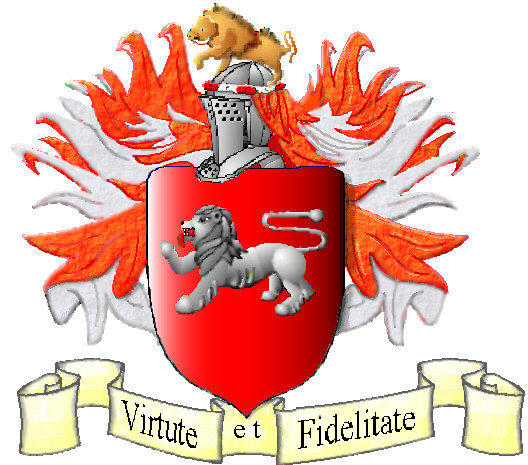
The Armorial Bearings are Arms: Gu. a lion pass. ar. Crest: A boar pass. ppr. Motto: Vertute et fidelitate. However, some other authorities show the bearings to be: Arms: A white lion on red grounds (signifying a course without relaxation); Crest: Two palms, a Cross surmounted by a laurel branch over a princely crown; Supporters: The shield accompanied by two battle axes and two Irish pikes under the shield, two branches of shamrock (the national symbol of Ireland); Motto: Virtute et Fidelitate. One branch has "Spero"; another Semper et Ubique Fideles." The War Cry was: "Fianae Abu" and sometimes "Ui Tuathail Abu" the former meaning "Victory to the Fenians"; and the later "Victory to the O'Tooles."
(Irish Pedigrees by John O'Hart, Published in 1892 by James Duffy & Co. Ltd. Dublin.) He was King of Ireland in IrelandG, between 119 and 123.2
This Monarch was King of Leinster in the beginning of the second century. He divided his great possessions amongst his thirty sons, in a Will called "The Will of Cahir More," contained in the "Book of Leacan" and in the "Book of Ballymote." His posterity formed the principal families in Leinster: namely the O'Connor "Faley," Princes of Offaley; O'Dempsey, O'Dunn, O'Regan, MacColgan, O'Harty, MacMurrough, Kings of Leinster; Cavenagh, O'Byrne, O'Toole, O'Murphy, O'Mulrian, or O'Ryan, O'Kinsellagh, O'Duffy, O'DOWLING, OCormac, O'Muldoon, O'Gorman, O'Mullen, O'Mooney, and O'Brenan, chiefs in Kilkenny, etc.- Connellan
O'Toole or Ui Tuathail: The O'Tooles were Kings of Leinster and princes of Imaile (now counties Wicklow and Kildare), Chieftains of Hy-Murray, Castle Kevin, Glendalough, and Powerscourt; and Omey in West Connaught. This pedigree was in the possession of Rev. Patrick Laurence O'Toole, OCC, Whitefriar Street, Church Dublin at time of writing.
The Armorial Bearings are Arms: Gu. a lion pass. ar. Crest: A boar pass. ppr. Motto: Vertute et fidelitate. However, some other authorities show the bearings to be: Arms: A white lion on red grounds (signifying a course without relaxation); Crest: Two palms, a Cross surmounted by a laurel branch over a princely crown; Supporters: The shield accompanied by two battle axes and two Irish pikes under the shield, two branches of shamrock (the national symbol of Ireland); Motto: Virtute et Fidelitate. One branch has "Spero"; another Semper et Ubique Fideles." The War Cry was: "Fianae Abu" and sometimes "Ui Tuathail Abu" the former meaning "Victory to the Fenians"; and the later "Victory to the O'Tooles."
(Irish Pedigrees by John O'Hart, Published in 1892 by James Duffy & Co. Ltd. Dublin.) He was King of Ireland in IrelandG, between 119 and 123.2
Citations
- [S3] John O'Hart, Irish Pedigrees or The Origin and Stem of The Irish Nation, Source Medium: Book
Source Quality: Good
Much of the Biblical genealogy is a stratight lift from the Bible and while the following characters are generally known to exist there are disputes with O'Hart on order and dates. For its time this was a scholarly work but the various source historical documents do provide confusion themselves., 641, 760 - [S3] John O'Hart, Irish Pedigrees or The Origin and Stem of The Irish Nation, 640
Baosgne O'Connor-Faley-No.81
M, #243, d. DECEASED
| References | My Ancestors O'Connor Faley (No. 8) - Laeghaire Lorc to Fiacha Baicheda |
Parents
| Father* | Nuadhas Neacht O'Connor-Faley-No.8 (d. 109 BCE) |
| Pedigree Link |
Family
Family:
| Son* | Cabhall Coole+ (d. DECEASED) |
Biography
Baosgne O'Connor-Faley-No.8 was born in Ireland. He died DECEASED in Ireland.
Facts
Baosgne O'Connor-Faley-No.8 was affiliated with Pagan.2 He had reference number 243. Baoisgne, son of Nuadhas Neacht. Father of Cabhall (Coole) who was the father of Fionn commonly called Finn MacCoole the illustrious General in the 3rd Century of the'Fenians of Ireland'. (Irish Pedigrees by John O'Hart, Published in 1892 by James Duffy & Co. Ltd. Dublin.)
Citations
- [S3] John O'Hart, Irish Pedigrees or The Origin and Stem of The Irish Nation, Source Medium: Book
Source Quality: Good
Much of the Biblical genealogy is a stratight lift from the Bible and while the following characters are generally known to exist there are disputes with O'Hart on order and dates. For its time this was a scholarly work but the various source historical documents do provide confusion themselves., 640 - [S3] John O'Hart, Irish Pedigrees or The Origin and Stem of The Irish Nation, 59
Cairbre Cluitheachar O'Connor-Faley-No.81
M, #244, d. DECEASED
| References | My Ancestors O'Connor Faley (No. 8) - Laeghaire Lorc to Fiacha Baicheda |
Parents
| Father* | Cu-Corb O'Connor-Faley-No.8 (d. DECEASED) |
| Pedigree Link |
Biography
Cairbre Cluitheachar O'Connor-Faley-No.8 was born in Ireland. He died DECEASED in Ireland.
Facts
Cairbre Cluitheachar O'Connor-Faley-No.8 had reference number 244. Cairbre Cluitheacher, son of Cu-Corb. Ancestor of Donegan (lords of Dal Aracht); of O'Dwyer (lords of Killnamanagh); of O'Urcha (which has been anglicized 'Archer'); of O'Cooney, O'Kearnan, O'Conalty, O'Hartley, O'Arrachtan (modernised Harrington); O'Skellan (modernised Skilling); O'Congal, Clan Brian, O'Dubhcron, MacLongachan, O'Trena, O'Aodhan, O'Brangal, O'Corban, O'Dunedy, etc. (Irish Pedigrees or The Origin and Stem of The Irish Nation by James O'Hart published in 1892 by James Duffy & Co. Ltd. Dublin).
Citations
- [S3] John O'Hart, Irish Pedigrees or The Origin and Stem of The Irish Nation, Source Medium: Book
Source Quality: Good
Much of the Biblical genealogy is a stratight lift from the Bible and while the following characters are generally known to exist there are disputes with O'Hart on order and dates. For its time this was a scholarly work but the various source historical documents do provide confusion themselves., 641
Ceathramhadh O'Connor-Faley-No.81
M, #245, d. DECEASED
| References | My Ancestors O'Connor Faley (No. 8) - Laeghaire Lorc to Fiacha Baicheda |
Parents
| Father* | Niadh Corb O'Connor-Faley-No.8 (d. DECEASED) |
| Pedigree Link |
Biography
Ceathramhadh O'Connor-Faley-No.8 was born in Ireland. He died DECEASED in Ireland.
Facts
Ceathramhadh O'Connor-Faley-No.8 was also known as Crimthann Culbuidh. He was affiliated with Pagan.2 He had reference number 245. Ceathramhadh, son of Neadh [nia] Corb. According to some authorities Cormac Gaeltach had a brother named Crimthan Culbuidh, who, in succession to his grand-nephew Cathair Mor, was the Monarch Conn Ceadcathach made King of Leinster. (Irish Pedigrees by John O'Hart, Published in 1892 by James Duffy & Co. Ltd. Dublin.)
Citations
- [S3] John O'Hart, Irish Pedigrees or The Origin and Stem of The Irish Nation, Source Medium: Book
Source Quality: Good
Much of the Biblical genealogy is a stratight lift from the Bible and while the following characters are generally known to exist there are disputes with O'Hart on order and dates. For its time this was a scholarly work but the various source historical documents do provide confusion themselves., 641 - [S3] John O'Hart, Irish Pedigrees or The Origin and Stem of The Irish Nation, 59
Conchobhar Abhraoidhruaidh O'Connor-Faley-No.81
M, #246, d. 007 BCE
| References | Kings My Ancestors O'Connor Faley (No. 8) - Laeghaire Lorc to Fiacha Baicheda |
Parents
| Father* | Fionn File O'Connor-Faley-No.8 (d. DECEASED) |
| Pedigree Link |
Family
Family:
| Son* | Mogh Corb O'Connor-Faley-No.8+ (d. DECEASED) |
Biography
Conchobhar Abhraoidhruaidh O'Connor-Faley-No.8 was born in Ireland. He died in 007 BCE in IrelandG.2
Facts
Conchobhar Abhraoidhruaidh O'Connor-Faley-No.8 was affiliated with Pagan.3 He held the title.2 He had reference number 246. Conchobhar Abhraoidhruaidh, son of Fionn File, was 99th Monarch of Ireland from 8 BC to 7 BC. He became King after the 98th Monarch, Lughaidh Sriabh-n Dearg, fell on his own sword. (Irish Pedigrees by John O'Hart, Published in 1892 by James Duffy & Co. Ltd. Dublin.) He was King of Ireland in IrelandG, between 008 BCE and 007 BCE.4
Citations
- [S3] John O'Hart, Irish Pedigrees or The Origin and Stem of The Irish Nation, Source Medium: Book
Source Quality: Good
Much of the Biblical genealogy is a stratight lift from the Bible and while the following characters are generally known to exist there are disputes with O'Hart on order and dates. For its time this was a scholarly work but the various source historical documents do provide confusion themselves., 641 - [S3] John O'Hart, Irish Pedigrees or The Origin and Stem of The Irish Nation, 58, 641
- [S3] John O'Hart, Irish Pedigrees or The Origin and Stem of The Irish Nation, 59
- [S3] John O'Hart, Irish Pedigrees or The Origin and Stem of The Irish Nation, 640
Cormac O'Connor-Faley-No.81
M, #247, d. DECEASED
| References | My Ancestors O'Connor Faley (No. 8) - Laeghaire Lorc to Fiacha Baicheda |
Parents
| Father* | Cu-Corb O'Connor-Faley-No.8 (d. DECEASED) |
| Pedigree Link |
Biography
Cormac O'Connor-Faley-No.8 was born in Ireland. He died DECEASED in Ireland.
Facts
Cormac O'Connor-Faley-No.8 had reference number 247. Cormac, son of Cu-Corb. A quo Dal Cormaic. Ancestor of Quirk. (Irish Pedigrees or The Origin and Stem of The Irish Nation by James O'Hart published in 1892 by James Duffy & Co. Ltd. Dublin).
Citations
- [S3] John O'Hart, Irish Pedigrees or The Origin and Stem of The Irish Nation, Source Medium: Book
Source Quality: Good
Much of the Biblical genealogy is a stratight lift from the Bible and while the following characters are generally known to exist there are disputes with O'Hart on order and dates. For its time this was a scholarly work but the various source historical documents do provide confusion themselves., 641
Cormac Gaeltach O'Connor-Faley-No.81
M, #248, d. DECEASED
| References | My Ancestors O'Connor Faley (No. 8) - Laeghaire Lorc to Fiacha Baicheda |
Parents
| Father* | Niadh Corb O'Connor-Faley-No.8 (d. DECEASED) |
| Pedigree Link |
Family
Family:
| Son* | Felim Fiorurglas O'Connor-Faley-No.8+ (d. DECEASED) |
Biography
Cormac Gaeltach O'Connor-Faley-No.8 was born in Ireland. He died DECEASED in Ireland.
Facts
Cormac Gaeltach O'Connor-Faley-No.8 was affiliated with Pagan.2 He had reference number 248. Cormac Gealtach, son of Neadh [nia] Corb. This Cormac Gaeltach is supposed to be the "Galgacus" or 'Tacticus,' who led an army to Alba, to aid the Scots and Picts against the Romans, and was defeated by Agricola at the Grampion Hills. -see O'Halloran's History of Ireland, page 217. (Irish Pedigrees by John O'Hart, Published in 1892 by James Duffy & Co. Ltd. Dublin.)
Citations
- [S3] John O'Hart, Irish Pedigrees or The Origin and Stem of The Irish Nation, Source Medium: Book
Source Quality: Good
Much of the Biblical genealogy is a stratight lift from the Bible and while the following characters are generally known to exist there are disputes with O'Hart on order and dates. For its time this was a scholarly work but the various source historical documents do provide confusion themselves., 641 - [S3] John O'Hart, Irish Pedigrees or The Origin and Stem of The Irish Nation, 59
Cu-Corb O'Connor-Faley-No.81
M, #249, d. DECEASED
| References | Kings My Ancestors O'Connor Faley (No. 8) - Laeghaire Lorc to Fiacha Baicheda |
Parents
| Father* | Mogh Corb O'Connor-Faley-No.8 (d. DECEASED) |
| Pedigree Link |
Family
Family:
| Son* | Cairbre Cluitheachar O'Connor-Faley-No.8 (d. DECEASED) |
| Son* | Cormac O'Connor-Faley-No.8 (d. DECEASED) |
| Son* | Messincorb O'Connor-Faley-No.8+ (d. DECEASED) |
| Son* | Niadh Corb O'Connor-Faley-No.8+ (d. DECEASED) |
Biography
Cu-Corb O'Connor-Faley-No.8 was born in Ireland. He died DECEASED in Ireland.
Facts
Cu-Corb O'Connor-Faley-No.8 was affiliated with Pagan.2 He held the title.1 He was King of Leinster in Leinster, Ireland.3 He had reference number 249. Cu-Corb, son of Mogh Corb. King of Leinster. (Irish Pedigrees by John O'Hart, Published in 1892 by James Duffy & Co. Ltd. Dublin.)
Citations
- [S3] John O'Hart, Irish Pedigrees or The Origin and Stem of The Irish Nation, Source Medium: Book
Source Quality: Good
Much of the Biblical genealogy is a stratight lift from the Bible and while the following characters are generally known to exist there are disputes with O'Hart on order and dates. For its time this was a scholarly work but the various source historical documents do provide confusion themselves., 641 - [S3] John O'Hart, Irish Pedigrees or The Origin and Stem of The Irish Nation, 59
- [S3] John O'Hart, Irish Pedigrees or The Origin and Stem of The Irish Nation, 640
Eochaidh Lamh-dearg O'Connor-Faley-No.81
M, #250, d. DECEASED
| References | O'Connor Faley (No. 8) - Laeghaire Lorc to Fiacha Baicheda |
Parents
| Father* | Messincorb O'Connor-Faley-No.8 (d. DECEASED) |
| Pedigree Link |
Family
Family:
| Son* | Fotach O'Connor-Faley-No.8+ (d. DECEASED) |
Biography
Eochaidh Lamh-dearg O'Connor-Faley-No.8 was born in Ireland. He died DECEASED in Ireland.
Facts
Eochaidh Lamh-dearg O'Connor-Faley-No.8 had reference number 250. Eochaidh Lamh-dearg son of Messincorb. (Irish Pedigrees or The Origin and Stem of The Irish Nation by James O'Hart published in 1892 by James Duffy & Co. Ltd. Dublin).
Citations
- [S3] John O'Hart, Irish Pedigrees or The Origin and Stem of The Irish Nation, Source Medium: Book
Source Quality: Good
Much of the Biblical genealogy is a stratight lift from the Bible and while the following characters are generally known to exist there are disputes with O'Hart on order and dates. For its time this was a scholarly work but the various source historical documents do provide confusion themselves., 641
|
This is a free site without advertisements |
   |
 |
Compiler: Brian Thomas Dowling (1955-)
Page created by John Cardinal's GedSite v3.07 | Based on a design by Contented Designs